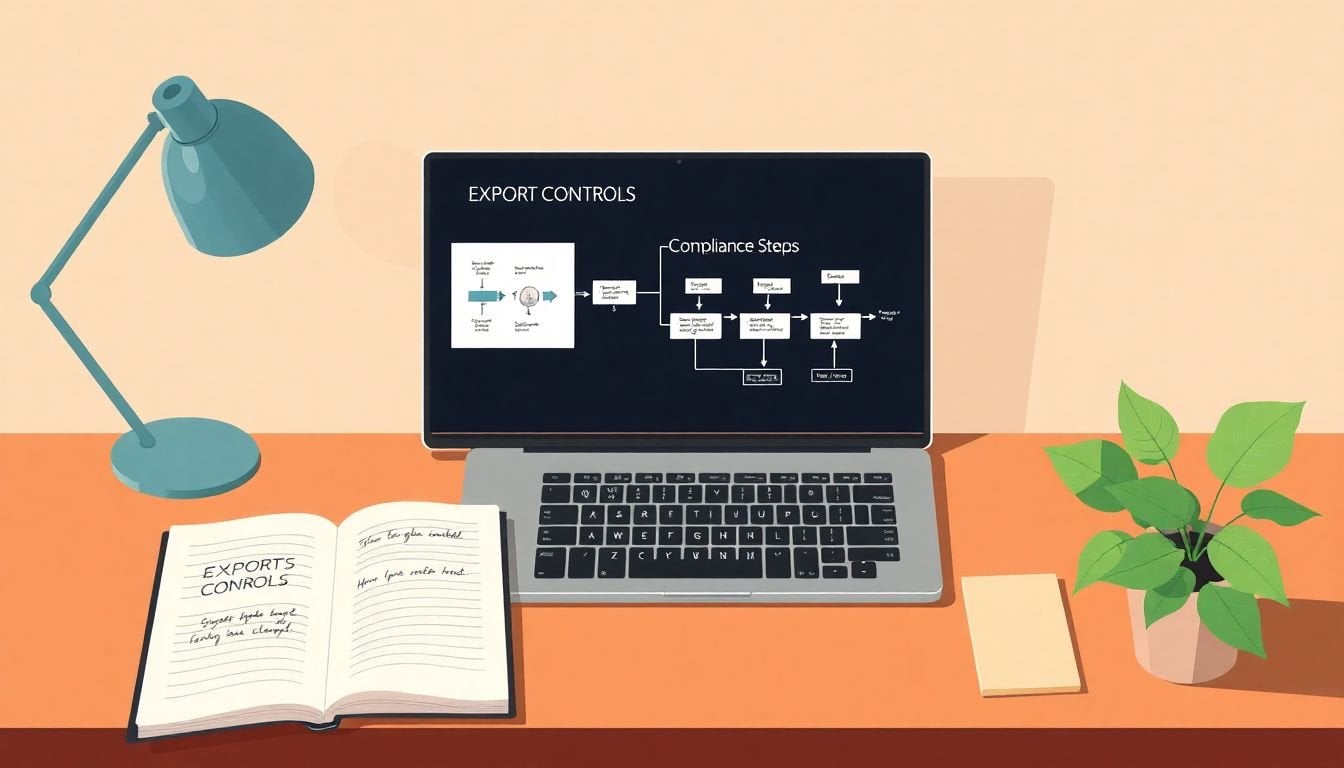
Navigating Export Controls for Restricted Content: How To Ensure Compliance
I’ve worked with international deals where “restricted content” sounded vague… until the first time someone asked, “Do we even need a license for this?” That’s when export controls stop being theoretical and start feeling very real.
If you’re worried about accidentally shipping something you shouldn’t (or missing a rule that comes back to bite you later), you’re not alone. The good news? You can make this way more manageable with a simple, repeatable compliance workflow.
In this post, I’ll walk you through what export controls are, the key pieces you need to check, and a practical due-diligence process you can actually use. I’ll also cover what to do when you hit common gray areas—because those come up more often than people expect.
Key Takeaways
– Export controls are government rules that restrict the export (and often the transfer) of certain goods, software, technology, and sometimes technical data. In the U.S., the framework is largely the Export Administration Regulations (EAR); in the EU, it’s governed through EU dual-use rules. Noncompliance can mean severe penalties, including civil fines, denial of export privileges, and in serious cases, criminal exposure.
– Start with classification (for the U.S., this usually means figuring out the right ECCN), then move to license requirements, and only then address end-use and end-user risks. If you don’t document your steps, you don’t really have compliance—you just have hope.
– For U.S. exports, you also need to screen against restricted party lists (like the BIS Entity List) and pay attention to indirect transfers—the “who ultimately receives the item” question matters as much as the named customer.
– Raw materials and components can become export-sensitive too. If you rely on critical inputs (rare earths, certain minerals, or specialized components), you’ll want to track policy updates and build supply-chain buffers so you’re not scrambling when restrictions tighten.
– Export-controlled technology affects deals in more ways than just shipping boxes. Transfers via cloud access, remote support, training, or providing source code can count as “exports” depending on the jurisdiction and the facts of the transaction.
– The easiest way to manage this day-to-day is to use a checklist, keep consistent records, and do periodic reviews. In my experience, quarterly isn’t enough for fast-moving sectors—so I recommend a “major change” review whenever your legal team flags new rules or guidance.
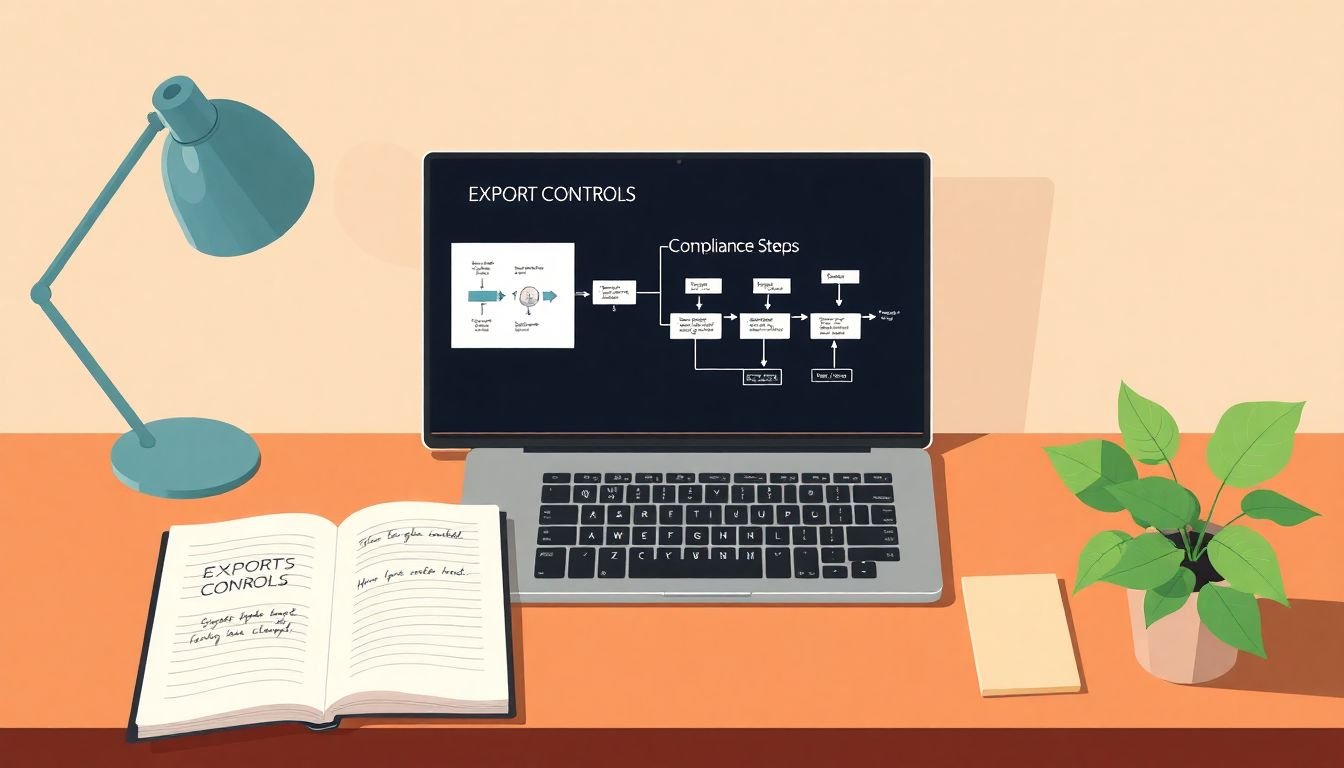
Understanding Export Controls (and What Actually Triggers Them)
Export controls are government rules that regulate how certain items—goods, software, technology, and sometimes technical data—are sent across borders. In plain terms: it’s the legal “gatekeeping” around sensitive capabilities.
What surprised me the first time I dug into this deeply is how broad the trigger can be. It’s not only physical shipments. In many cases, providing access to controlled technology (for example, through cloud services, remote troubleshooting, or training materials) can count as an export depending on the jurisdiction and the facts.
In the U.S., for example, the EAR (Export Administration Regulations) is the main rule set for dual-use items. For the EU, there’s a dual-use export control framework that covers similar categories of controlled items (again, depending on classification and end-use/end-user).
So what’s the practical starting point? You need to figure out whether your item is controlled and then apply the rule set that matches your scenario. That usually means:
- Classifying the item (ECCN in the U.S.; dual-use categories in the EU)
- Checking license requirements for the destination and scenario
- Screening the end user and (when applicable) related parties
- Confirming end-use isn’t prohibited or suspicious
And yes—when you get this wrong, it can become expensive fast. I’ve seen teams lose weeks because they treated classification as “probably fine” and then had to unwind shipments and contracts when compliance flagged a mismatch.
Key Elements of Export Controls (The Checklist You’ll Reuse)
Most export control mistakes come from skipping one of these elements. Here’s the sequence I recommend because it keeps you from backtracking.
1) Classification: What exactly are you exporting?
In the U.S., you typically classify items using ECCNs under the EAR. In the EU, you’ll look at dual-use control lists/categories. This step determines whether the item is controlled at all—and if it is, what controls apply.
In my experience, classification is where teams get most stuck because it requires product knowledge and sometimes a technical review. If you don’t have internal expertise, involve the engineers early. Waiting until late-stage contracting is how you end up scrambling.
2) Licensing: Do you need permission for this destination and scenario?
Licenses aren’t “always.” But if your item is controlled, you may need a license depending on the destination country, end user, and end use.
For U.S.-based guidance, the primary source is the Bureau of Industry and Security (BIS) at https://www.bis.doc.gov. Your exact requirement depends on the ECCN and the “reasons for control.”
3) End-user and restricted party screening
Even if a product is correctly classified, you still need to check who receives it. In the U.S., restricted party screening commonly includes lists maintained by BIS and other parts of the U.S. government.
If you’re dealing with restricted entities, “papering” the transaction with a contract isn’t enough. You need to actually verify.
4) End-use restrictions: What will the item be used for?
This is the part people often underestimate. Two customers can look similar on the surface, but if the end-use signals a prohibited application, you may need a license or you may have to stop.
A good due-diligence workflow treats end-use questions like engineering requirements: specific, documented, and repeatable.
5) Indirect exports and “who ultimately benefits”
Another element that causes problems is indirect transfers. Sometimes the named customer isn’t the real operator of the technology, or the item is routed through affiliates.
That’s why you should understand your transaction chain (customer, affiliates, resellers, integrators, and final location). If you don’t, you can end up approving the wrong party or missing a controlled transfer.
Steps for Due Diligence (A Workflow You Can Copy/Paste)
If you want compliance that holds up, don’t treat due diligence like one-off research. Treat it like a process with inputs and outputs.
Here’s a workflow I’ve used with teams handling dual-use items and sensitive technical data. It’s not fancy, but it’s consistent—and consistency is what audits look for.
Step A: Gather the transaction facts (before you classify)
- Item details: product name, version, specs, intended configurations
- What’s actually being transferred: hardware, software, models, source code, API access, training materials
- Destination: country, city (if relevant), and where the item will be used
- Parties: ship-to, bill-to, end user, and any intermediaries
- End-use: how the customer says it will be used (and whether it matches the item’s capabilities)
- Transfer method: shipment, download, remote access, on-site training, cloud environment
Step B: Classify the item
In the U.S., classification usually means determining the correct ECCN. If you’re unsure, don’t guess—escalate. In a previous workflow, we caught a near-miss because engineering thought the item fell under a “general purpose” bucket, but the technical review showed a controlled capability tied to performance parameters.
When classification is uncertain, document why you believe the classification is correct, and flag anything that needs legal input.
Step C: Determine license requirements
Once classification is done, check whether a license is required for the destination and scenario. This is where you connect:
- ECCN (or relevant control list entry)
- Reasons for control (what the control is targeting)
- Destination country
- End user and end use
If a license is required, start the application early. I’ve seen timelines get tight when teams wait until the last week of a contract cycle.
Step D: Screen end users and restricted parties
Run the parties involved through the appropriate restricted party lists. Make sure you’re screening the right entities (including legal names, known aliases, and parent/subsidiary relationships when relevant).
Also—this matters—screening isn’t “set it and forget it.” Rescreen if the deal changes (new affiliate, new destination, revised end use).
Step E: Confirm end-use and handle red flags
Ask end-use questions that go beyond “what product are you buying?” You want to know what they’ll do with it and whether it aligns with a prohibited or high-risk application.
If you see red flags (unexpected end use, unclear documentation, unusual routing, or refusal to provide basic end-use details), pause and escalate internally.
Step F: Keep records that prove what you did
This is where you win or lose in an audit. Keep a record of:
- Classification rationale (who reviewed it, what specs were used)
- License decision (why a license was or wasn’t required)
- Screening results (date, lists used, match/no-match outcome)
- End-use documentation (customer statements, end-use letters if applicable)
- Approvals (internal sign-offs, legal review notes)
A simple due-diligence checklist template (copy this)
- Transaction ID: __________
- Item/ECCN: __________ (version/specs on file: Yes/No)
- Destination country: __________
- License required? Yes/No/Unknown
- License application status: Not started / Submitted / Approved / Denied
- End user legal name: __________
- Restricted party screening: Date __________; Lists used __________; Outcome __________
- End-use description: __________
- Red flags? Yes/No (details: __________)
- Approvals: Compliance __________; Legal __________
- Record location (folder name): __________
One more thing: if you’re handling “restricted content” that involves AI models, weights, or technical data, treat access and transfer methods as part of the due-diligence facts—not as afterthoughts. Remote access can be a transfer just like a shipment.

What Are the Latest Changes in Export Controls as of 2025?
Export control updates tend to land in waves, and 2025 has been no exception—especially for advanced computing and technology that can be repurposed for sensitive applications.
That said, I don’t want to guess at specific dates or claim “this law started on X day” without pointing you to the actual primary sources. If you’re trying to stay current, the most reliable approach is to monitor the rulemaking and guidance directly from BIS and the Federal Register.
Here are the places I check first when I need verifiable updates:
- BIS updates (rulemaking, guidance, and links to final rules): https://www.bis.doc.gov
- Federal Register (official publication of final rules and amendments): search for BIS export control amendments
When you see a new rule, don’t just read the headline. Look for:
- Which ECCNs were amended or newly controlled
- Whether the change affects license requirements by destination
- Any new definition changes (these matter for classification)
- Whether there are changes to documentation or compliance expectations
If your company touches AI models, advanced chips, or high-performance compute, it’s smart to run a “rule impact” review: identify which SKUs/ECCNs you use today and compare them to the updated control text.
How Do Export Restrictions on Critical Raw Materials Affect Global Supply Chains?
Raw materials can absolutely become a compliance issue. Even when the “controlled item” isn’t a finished product, restrictions on certain minerals, rare earths, or upstream inputs can ripple through manufacturing schedules.
To make this concrete, I looked for a source you can actually verify—OECD reporting on trade measures and supply chain impacts. If you’re referencing “more restrictions” in a write-up, you should cite the OECD report and explain what the metric means.
Here’s the practical takeaway: when restrictions increase, you often see one or more of these outcomes:
- Longer lead times for inputs
- Extra documentation requests from suppliers
- Higher costs due to rerouting or re-sourcing
- More licensing or policy checks upstream in the supply chain
If your business depends on critical inputs, I’d do three things:
- Map your supply chain (identify which inputs are most sensitive)
- Build redundancy (alternative suppliers or qualified substitutes)
- Track policy changes and update procurement questionnaires
Also, don’t underestimate inventory strategy. In my experience, having a buffer on critical inputs can be the difference between a minor delay and a full production stop.
How Do Export-Controlled Technologies Impact International Business Deals?
Export-controlled technology adds friction to deals because it changes the “risk math.” Every contract becomes a compliance exercise: classification, licensing, end-use, end-user, and sometimes even how the service is delivered.
Here’s what I’ve noticed specifically when the technology is sensitive (dual-use, AI-related, or high-performance compute):
- Sales cycles slow down because compliance needs facts earlier
- Customer questionnaires get longer (end-use and end-user clarity matters)
- Contract language may need updates to reflect compliance obligations
One common failure point: teams assume “we’re just providing software” means it’s automatically low risk. But if it’s controlled technical data, access to model weights, or remote technical support, it still may be regulated.
So what should you do? Build a deal-stage process that forces the right questions early:
- At proposal stage: collect end-use and end-user details
- Before signature: confirm classification and license requirement status
- Before delivery: rescreen parties if anything changed
- After delivery: store records tied to the transaction ID
If you’re training your team, use internal compliance training that’s scenario-based (realistic examples of “what counts” as a transfer and how to document it). That’s more effective than generic slides.
What Are Some Practical Tips for Managing Export Compliance Day to Day?
Export compliance doesn’t have to feel like a constant emergency. You just need a system that catches issues before they become shipments.
1) Use a single checklist per transaction
Don’t let different teams invent different processes. Keep one checklist with the same fields every time (classification, license status, screening results, end-use documentation, approvals, and record location).
2) Review regulations when something changes in your business
Quarterly reviews are fine for keeping up with general updates, but I also recommend an “event-based” review. Examples: you launch a new product, change a distribution partner, start offering cloud access, or expand into a new country.
3) Keep your records organized like you’ll need them tomorrow
During audits, the question is usually: “Show me how you decided.” If your documentation is scattered across email threads and spreadsheets, you’ll waste time.
I like naming folders like:
- ExportCompliance_YYYY-MM_TransactionID_CustomerName
- Classification_ECCN_Rationale
- Screening_RestrictedPartyResults_Date
- License_Docs_Status
4) Escalate early when classification feels borderline
If engineers tell you “it’s probably ECCN X” but can’t back it up with specs, don’t ship on that assumption. Get a second opinion. In my experience, the cost of escalation is almost always cheaper than the cost of unwinding a shipment or contract.
5) Train the people who touch deals
Compliance training shouldn’t only be for legal. Sales, customer success, and technical support need to understand what questions to ask and what documentation matters.
That’s how you prevent accidental transfers—like emailing controlled technical data to the wrong party or giving remote access without the right checks.
FAQs
Export controls are regulations that restrict how certain goods, software, technology, and technical data are exported or transferred across borders. They’re important because they support national security goals, help prevent proliferation of sensitive capabilities, and ensure companies follow applicable laws and licensing requirements.
I’d start with a repeatable process: classify the item (e.g., ECCN in the U.S.), determine whether a license is required, screen the end user and related parties, confirm end-use details, and keep solid records of your decisions. Training and periodic internal reviews help keep the process working as your products and markets change.
Due diligence usually looks like this: (1) identify the applicable jurisdiction and the item details, (2) classify the item correctly, (3) check license requirements for the destination and scenario, (4) screen the end user and other relevant parties against restricted lists, (5) verify end-use information, and (6) document everything so you can explain your decision later. If anything is unclear or borderline, escalate before exporting.
Follow updates from the responsible government agencies (for U.S. rules, BIS is a key source at https://www.bis.doc.gov), monitor Federal Register rulemaking when you need verifiable changes, and set internal triggers for “impact reviews” when your product line, delivery method, or target countries change. Subscribing to official alerts and having a legal partner review major updates also helps.