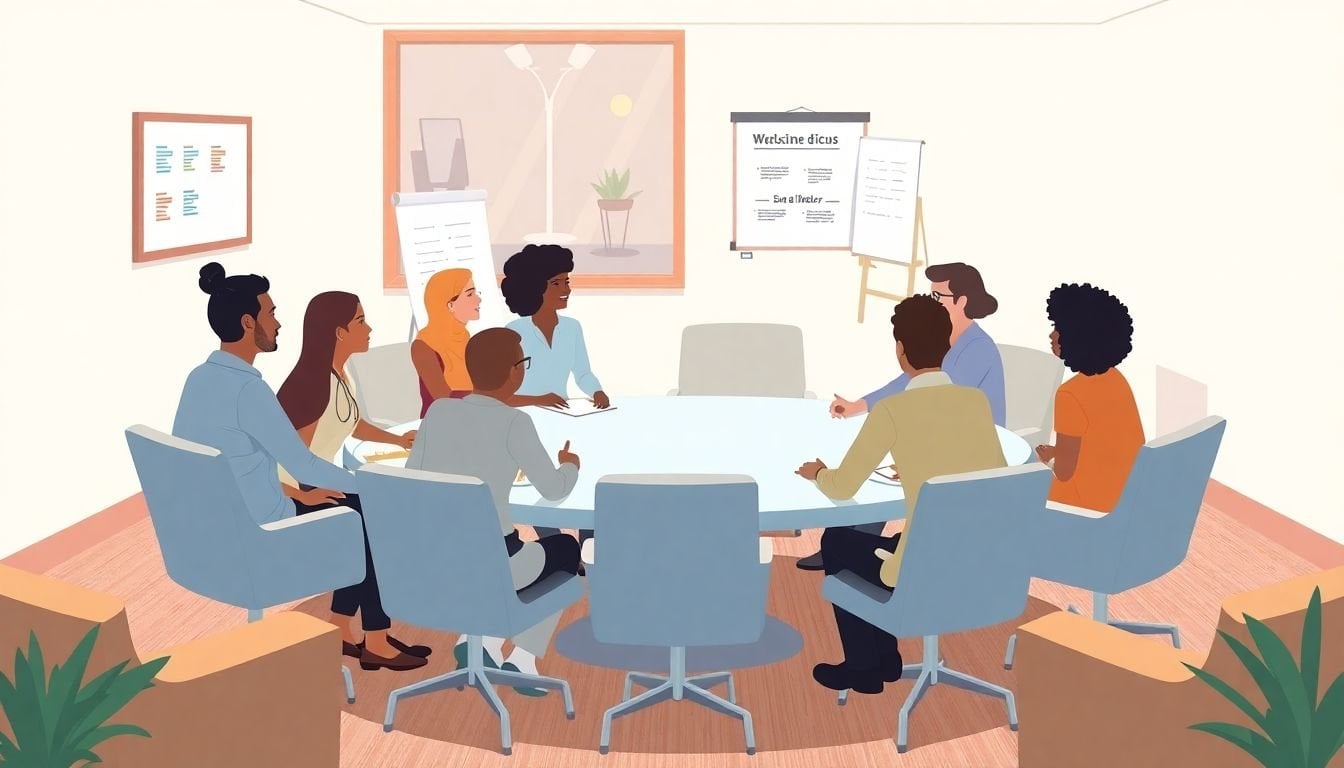
How to Design DEI Training with 9 Clear Role-Play Steps
I’ve sat in on a lot of DEI sessions where the room goes quiet the moment the facilitator starts “talking at” people. In our last couple of workshops, participants disengaged during lecture-heavy segments—then perked up the second we switched to role-play scenarios that felt like their actual day-to-day. That’s what convinced me role-plays aren’t just a nice extra; they’re one of the few methods that reliably turns DEI concepts into something people can do, not just nod along to.
So if you’re trying to design DEI training with scenario role-plays that actually sticks, here’s the practical way I approach it: build realistic situations, set clear goals, run the exercise safely, and debrief with intention. No “gotcha” moments. No awkward guessing games. Just structured practice that helps people notice bias, respond better, and feel more confident having hard conversations.
Key Takeaways
- Use scenario role-plays to drive practice, not just awareness. A solid format is 10 minutes role-play + 15 minutes debrief so participants rehearse responses and then unpack what happened. In my experience, that rhythm improves retention more than repeating definitions.
- Set measurable objectives before you write scenarios. Example goal: “Increase bias recognition accuracy.” Measure it with a 5-item rubric scored 1–5 (e.g., identifies the bias type, names impact, suggests an inclusive alternative, uses respectful language, checks intent vs. impact).
- Base scenarios on patterns you actually see at work. Pull from HR cases, manager feedback, meeting notes, or anonymous pulse surveys. If you can’t trace the scenario to a real workplace pattern, it won’t feel real enough to change behavior.
- Use skilled facilitation when emotions are likely. For groups larger than 20, I recommend 2 facilitators so one can run the flow and the other can manage safety and participation. If you use actors, brief them with the learning objectives and “do/don’t” boundaries.
- Build a safe space with explicit ground rules. Don’t rely on “be respectful” alone. I use rules like confidentiality, no personal attacks, and criticize behaviors, not identities—then repeat them right before the role-play starts.
- Debrief with structured prompts so reflection turns into action. After each scenario, ask: “What did you notice?” “What would you do differently?” and “What’s one sentence you’d use next time?” Capture answers so they become follow-up commitments.
- Tailor complexity and roles to your organization. For leadership audiences, include decision points (e.g., performance feedback, promotion criteria). For frontline teams, focus on everyday interactions (e.g., meeting dynamics, collaboration norms).
- Mix role-plays with complementary activities. Pair them with a case study or micro-quiz (3–5 questions) to reinforce language and concepts. Variety keeps attention without turning the training into a “game.”
- Evaluate impact with pre/post + follow-up. I like a 30/60/90-day check: pre/post survey, then a short manager or peer observation form. Look for thresholds like “average rubric score increases by at least 0.5 points” or “participants report higher confidence by 20%.”
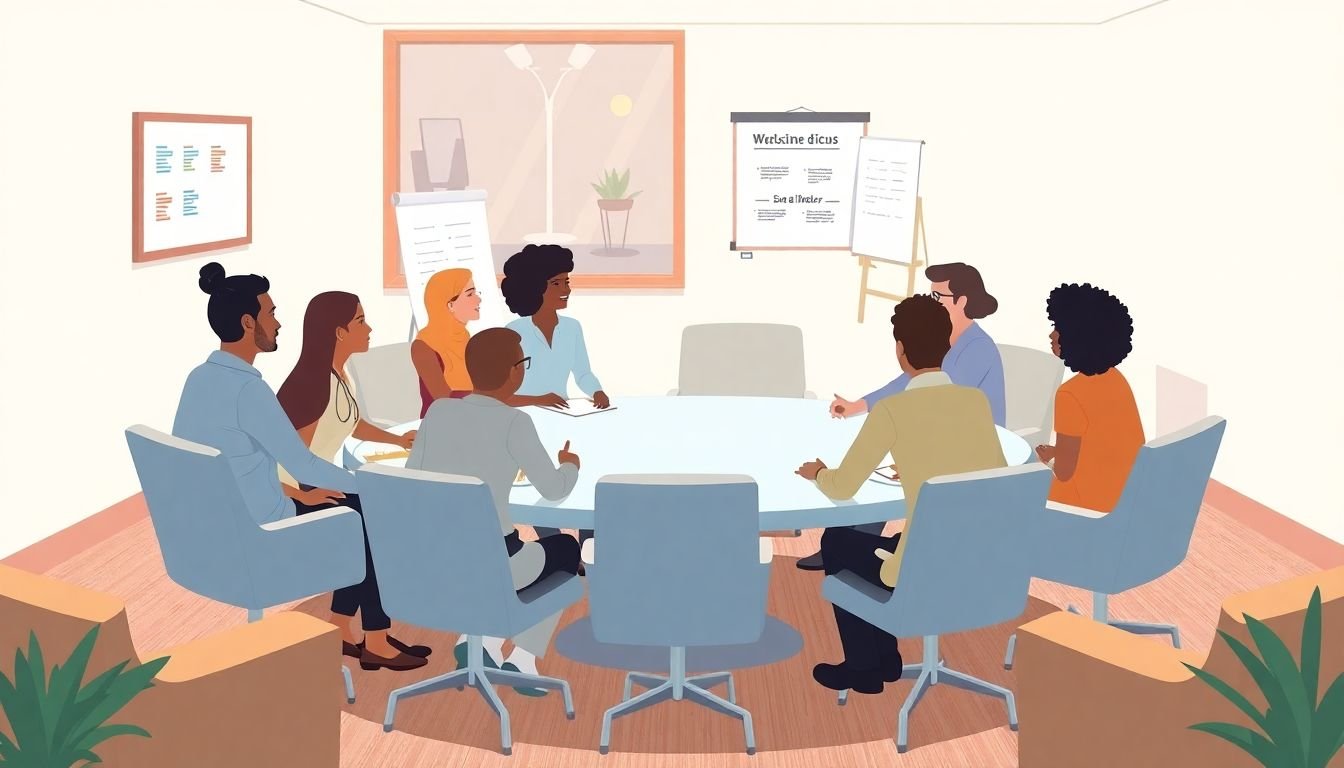
1. Design DEI Training with Scenario Role-Plays
When I build DEI training, I start by asking one simple question: What do we want people to do differently on Monday? Role-plays work best when they’re designed around real moments—meetings, feedback conversations, cross-team planning, performance discussions—where bias and exclusion can show up fast.
Here’s the default structure I use for each role-play block:
- 0–5 minutes: Set context + remind participants of ground rules.
- 5–15 minutes: Role-play (with a “pause point” at the moment bias or exclusion appears).
- 15–30 minutes: Debrief (notice → impact → alternative response → practice).
- 30–35 minutes: Capture 1–2 “try this next time” commitments.
What I noticed after running this format a few times: people don’t just remember the scenario—they remember the exact sentence they practiced during the debrief. That’s the difference between “learning about inclusion” and “learning how to include.”
Also, quick reality check: role-plays aren’t therapy, and they aren’t meant to pressure anyone to “confess” their intentions. The goal is to practice responses to situations, not to label participants. If you keep that boundary clear, you’ll get more honest engagement.
2. Define Objectives for Role-Play Scenarios
Before I write a single line of dialogue, I lock in objectives. Otherwise, you end up with “busy” role-plays that don’t change anything. Objectives also protect you during debrief—because you can steer the discussion back to what matters.
Use objectives in three layers:
- Behavior objective (what people will do): “Respond in a way that reduces harm and invites accountability.”
- Skill objective (how they’ll do it): “Use impact-focused language and ask a clarifying question.”
- Knowledge objective (what they’ll recognize): “Identify microaggressions and understand intent vs. impact.”
Then make it measurable. Here’s a simple approach that works well in workshops:
- Pre-training (5 minutes): 5-item confidence survey, 1–5 scale.
- Post-role-play (during debrief): facilitator uses a 5-item rubric to score participant responses (or small groups).
- Follow-up (30/60/90 days): short observation form from managers/peer leads.
Example rubric items (score 1–5):
- Names impact (not just intent)
- Uses respectful, non-defensive language
- Challenges the behavior without attacking identity
- Offers an inclusive alternative action
- Checks understanding (asks a clarifying question)
If you’re aiming to improve empathy specifically, don’t just say “be empathetic.” Define what empathy looks like in the scenario: listening, validating feelings, and adjusting your response.
3. Create Realistic Scenarios Based on Workplace Issues
The best scenarios don’t come from generic DEI templates. They come from patterns you can point to. I usually pull from:
- HR complaint themes (anonymized)
- Manager feedback from performance cycles
- Meeting notes showing who gets interrupted or ignored
- Anonymous pulse survey comments
For example, here’s a scenario I’ve used (anonymized and adapted) that targets microaggressions and empathy. You can lift this structure and swap in your own workplace details.
Sample Role-Play Scenario: “The Meeting Comment” (Microaggressions + Impact)
Target audience: All employees (works especially well for managers and team leads).
Time: 10 minutes role-play + 15 minutes debrief.
Learning objectives: Recognize a microaggression, explain impact, and practice an inclusive response.
Characters:
- Alex (team member; from a minority background; trying to contribute)
- Jordan (team lead; confident, slightly dismissive under stress)
- Sam (peer; unsure how to respond)
- Facilitator (optional) for “pause” prompts
Setting: Weekly project meeting. Alex has been preparing an update. The team is behind schedule.
Dialogue beats (scripted guidance for actors):
- Beat 1 (Setup): Jordan says, “We need quick updates. Keep it short.” Alex begins explaining a proposal.
- Beat 2 (Microaggression appears): Jordan interrupts: “That’s… interesting. Are you sure that’s the way we do it here?” (Tone: doubt, not curiosity.)
- Beat 3 (Impact moment): Alex hesitates, then says, “I can switch it to match what we’ve done.” Their voice gets smaller.
- Beat 4 (Peer reaction): Sam looks at the floor and stays quiet. Jordan moves on without inviting Alex’s perspective.
- Beat 5 (Pause point): Facilitator calls “Pause.”
- Beat 6 (Re-run with better response): Participants try alternative language and actions.
Facilitator prompts (during the pause):
- “What did you notice in Jordan’s language or tone?”
- “What impact might that have on Alex in that moment?”
- “What would an inclusive response sound like—without calling anyone ‘bad’?”
Expected “better response” elements (what participants should practice):
- Validate intent vs. impact: “I hear what you’re proposing—let’s talk through it.”
- Invite contribution: “Alex, can you walk us through your reasoning?”
- Ask clarifying question instead of challenging identity: “What assumptions are you using?”
- Correct dismissal: “We can still be efficient—let’s make space for this.”
Debrief questions (15 minutes):
- “Where exactly did the microaggression show up?”
- “How did Alex’s behavior change after the comment?”
- “What sentence would you use next time to keep momentum and be inclusive?”
- “What’s one thing Jordan could do differently in the future?”
Common failure modes (and fixes):
- Failure: Participants over-focus on “who’s right.”
Fix: Re-center on impact and response language. Use the rubric. - Failure: People get too vague (“be respectful”).
Fix: Require a specific sentence. “Write it down. Say it out loud.” - Failure: Debrief turns personal (“I’ve been accused of this”).
Fix: Redirect to behaviors in the scenario and remind everyone it’s practice, not confession.
If you’re worried about safety, start with lower-stakes scenarios (interruptions, meeting airtime, unclear feedback). Once the group is comfortable, you can move toward higher-emotion moments like performance feedback or conflict escalation.

4. Use Trained Facilitators or Actors
Here’s the truth: role-play only works if the room stays on track. That’s why facilitation matters more than most people think. I don’t mean “someone who can read slides.” I mean someone who can:
- interrupt unproductive spirals (“we’re arguing about intentions again”)
- keep the focus on the learning objective
- protect psychological safety while still allowing real discussion
- coach participants back to specific language
When actors are worth it: If your scenarios need emotional realism (conflict, dismissal, microaggressions), actors help. Participants react differently when the scenario isn’t “just a volunteer acting.”
When you can use internal staff: If you don’t have budget for actors, train internal participants. Give them a one-page briefing with:
- learning objectives
- how to portray the bias behavior (tone, timing)
- what not to do (no insults, no identity attacks)
- pause cues and how to respond when prompted
Default staffing rule I use: 1 facilitator for groups up to 15; 2 facilitators for 16–25; add a co-facilitator or observer for groups over 25 so you can manage dynamics without losing the learning thread.
5. Build Safe Spaces for Discussion
Safety isn’t a vibe. It’s a set of explicit agreements you repeat at the start and before debrief. If you don’t define it, people will define it for you—and sometimes they define it as “we can’t talk about anything hard.”
I use a short ground-rules script (you can copy/paste it):
- Learning over blame: we practice responses, not judge people.
- Confidentiality: what’s shared in the room stays in the room.
- Attack ideas, not identities: criticize behaviors and systems, not who someone is.
- Step up / step back: share airtime responsibly.
- Use “I” statements: “I noticed…” “I felt…” instead of “You always…”
Also, plan for quieter participants. If you have a group that tends to dominate, I recommend small-group debriefs first (3–5 people) and then a whole-group share. It’s amazing how much more honest people get when the spotlight isn’t on them immediately.
One more thing: if someone is triggered, don’t force them to “stay and participate.” Provide a clear option—take a break, step out, or use an anonymous note channel for feedback. That’s part of safety too.
6. Include Reflection and Group Discussion
Debrief is where learning actually lands. If you skip it or run it too loosely, role-plays become entertainment instead of skill-building. I always structure debrief in two phases: reflection and application.
Debrief format that works (15 minutes)
- 3 minutes: “What did you notice?” (facts, behaviors, language)
- 5 minutes: “What impact did it have?” (impact on the person, team, outcomes)
- 5 minutes: “What would you do differently?” (specific alternative response)
- 2 minutes: “One sentence commitment” (write it down)
Reflection prompts I like:
- “What part of the scenario felt familiar?”
- “What bias might have been operating—consciously or not?”
- “Where did you feel yourself get defensive, and what did you do with that?”
- “How would you check your intent vs. impact in real time?”
Expected learning outcomes (what you should see):
- Participants name the behavior (interrupting, discounting, asking “are you sure that’s how we do it here?”)
- Participants describe impact (hesitation, reduced confidence, less speaking up)
- Participants provide a concrete alternative response sentence
- Participants connect the scenario to their workplace routines (“in meetings,” “in feedback,” “during onboarding”)
And yes—sometimes people share personal stories. That can be powerful. Just make sure the facilitator redirects back to the skill and language being practiced. Otherwise, you risk turning a training into a support session.
7. Tailor Scenarios to Your Organization’s Needs
Generic scenarios feel generic. Tailoring is what makes the role-play feel like it belongs to your team. I start by mapping scenarios to your most common DEI friction points.
Here are tailoring angles that make a difference:
- Remote vs. in-person: in remote meetings, bias shows up through chat tone, who’s muted, and who gets called on.
- Role alignment: leadership scenarios should include decision criteria; frontline scenarios should include daily collaboration moments.
- Complexity: start with clear microaggressions and exclusionary behaviors, then move to nuanced tradeoffs (e.g., prioritizing work while still making space).
- Language: match your organization’s terms (performance framework, hiring rubric, meeting norms).
Also, involve people who know what “real” looks like. I’ve gotten the best scenario edits from managers who’ve dealt with conflict, plus employee resource group leaders who can spot when a scenario doesn’t match lived experience. Even if you only do 2–3 review sessions, you’ll catch issues early.
8. Combine Role-Plays with Other Interactive Methods
Role-play is powerful, but it shouldn’t be the only tool. The best DEI sessions I’ve seen use role-play as the centerpiece, then reinforce it with quick, targeted methods.
Here are practical add-ons that don’t bloat the agenda:
- 3–5 question micro-quiz: after the first role-play, test recognition of bias types and inclusive language. Keep it short.
- Case study comparison: show a short case (2–3 paragraphs) and ask, “Which response would have helped here?”
- Skill rehearsal round: run a second attempt with a different participant using the same scenario but a new “pause point.”
- Reflection journal (5 minutes): “What will I do next time?” with a required sentence they must write.
- Video or news clip (optional): use it only to frame the concept, then return to your workplace scenario.
One warning from experience: don’t overload participants with too many activities. If you try to cram role-play, video, quiz, and big group discussion all in one block, people get cognitively tired—and DEI fatigue is real. I’d rather run one excellent role-play with a great debrief than three rushed ones.
9. Evaluate Impact and Adjust Accordingly
Evaluation is where good training becomes better training. I recommend you plan it from day one—before the first scenario is printed—so you’re not scrambling to “collect feedback” at the end.
Step 1: Pre/post measures (immediately)
- Confidence survey (1–5): “I can respond to microaggressions in a respectful, effective way.”
- Recognition items (multiple choice): show short statements and ask which one reflects bias or inclusive language.
- Behavior intention: “In the next 30 days, I will use impact-focused language when addressing a concern.”
Step 2: Rubric-based scoring (during debrief)
- Use the 5-item rubric mentioned earlier.
- Score group responses, not individuals, if you want to reduce anxiety.
- Track averages by scenario so you can see what needs revision.
Step 3: Follow-up (30/60/90 days)
- Manager/peer observation form: 3–5 items like “Uses respectful impact-focused language,” “Invites quieter voices in meetings,” “Addresses dismissive behavior appropriately.”
- Short pulse survey: ask if participants have applied the specific language they practiced.
- Qualitative feedback: “Which scenario felt most useful, and why?”
Step 4: Iterate scenarios based on data
- If rubric scores are low on “offers inclusive alternative action,” rewrite the scenario so the pause point clearly reveals a moment to practice a specific sentence.
- If participants keep discussing intent instead of impact, add a debrief prompt and a second re-run where the group must practice impact-focused language.
- If people feel unsafe, tighten ground rules and reduce the scenario stakes for the next cohort.
What I like about this approach is that it makes DEI training a continuous improvement process, not a one-off event. You’ll still get pushback sometimes—people always have opinions—but your decisions will be grounded in what participants can do differently after the training.
FAQs
Role-plays turn DEI concepts into something people rehearse. In practice, that usually means better bias recognition, more empathy, and—most importantly—participants leave with language they can actually use in meetings and feedback conversations.
Start with your real workplace patterns: meeting dynamics, hiring/promotion friction, onboarding gaps, and conflict themes. Then match scenario roles and language to your organization’s structure (leadership vs. frontline) so participants recognize themselves in the situation.
I recommend qualified facilitators who can manage safety and keep the group focused on learning objectives. HR/L&D leaders often work well, and trained actors can be useful for realism—just make sure they’re briefed on the “do/don’t” boundaries and the learning goals.
Use clear ground rules: confidentiality, no personal attacks, and a learning-first mindset. Encourage respectful listening and “I” statements. When safety is explicit, participants are more willing to reflect honestly and try new responses.