
How to Measure Learning Outcomes: Effective Tools and Techniques
Measuring learning outcomes can feel like trying to solve an elaborate puzzle. You’ve got grades, projects, and “participation,” but somehow you still can’t answer the one question that matters: Did they actually learn what we said we’d teach?
In my experience, the fix isn’t finding a “magic tool.” It’s building a simple measurement workflow: write outcomes clearly, choose assessments that directly test them, collect evidence consistently, and then use the results to make decisions. Once you do that, the puzzle pieces start fitting together.
Below, I’ll walk you through practical tools and techniques you can use right away—plus examples of learning outcome statements, rubrics, and how to interpret your data without overcomplicating it.
Key Takeaways
- Define what you’re assessing (and how you’ll see it). Example: “By week 4, students will solve two-step linear equations with at least 80% accuracy on a 10-item quiz.”
- Mix formative + summative on purpose. Example: formative exit tickets every class (2–3 items) and a summative unit test (20–30 items) aligned to the same outcome targets.
- Use digital tools for faster evidence, not better guessing. Example: Nearpod-style polls for misconceptions + immediate feedback, then follow up with a short reteach plan.
- Know when you need numbers vs. narratives. Example: quantitative scores for mastery thresholds, qualitative comments for explaining reasoning or confidence.
- Write SMART outcomes that actually fit assessment. Example: “Students will write a claim-evidence-reasoning paragraph using a provided prompt, scored with a 4-criterion rubric by the end of the lesson.”
- Feedback should point somewhere. Example: “You’re missing the reasoning link” + one specific next step, not just “good job / needs work.”
- Plan for alignment and bias. Example: review your test items against the outcome list, and anonymize scoring for rubrics when possible.

Effective Ways to Measure Learning Outcomes
Let me start with the part people skip: measurement begins before you ever pick a quiz. First, decide what you’re trying to measure—knowledge, skills, or attitudes. If you can’t say it in one sentence, the data you collect later won’t mean much.
Here’s a quick example I’ve used when designing units:
Outcome: “By the end of the unit, students will be able to explain how photosynthesis works and correctly identify the role of light and chlorophyll in a written response.”
Evidence: a 6–8 question quiz (fact + process) plus a short written prompt scored with a rubric (so we’re not only measuring recall).
Now for the measurement workflow that keeps everything aligned:
- Formative (during learning): 2–5 minute checks (exit tickets, quick polls, short practice problems). Goal: catch misunderstandings early.
- Summative (end of learning): a larger task (unit test, project, performance). Goal: verify mastery against the outcome.
- Evidence review: scan results by outcome, not just by overall score.
- Instruction decision: reteach, adjust pacing, or provide targeted supports.
And yes—real-time data helps. Tools like real-time assessments can shorten the time between “I think they get it” and “they actually don’t.” I’ve seen this work especially well with misconception-heavy topics (like math procedures or science concepts where one wrong assumption derails everything).
One more thing: don’t only look at averages. If 70% of students score an “A” but the remaining 30% are stuck at the same misconception, you’ve still got a learning outcomes problem—you just didn’t notice it because the class average looks fine.
Types of Learning Outcomes
Most programs describe learning outcomes in three broad domains: cognitive, psychomotor, and affective. The useful part isn’t the label—it’s how each domain changes what “good evidence” looks like.
Cognitive outcomes (knowledge + thinking): Students explain, solve, compare, and justify. Evidence might be short-answer responses, problem-solving steps, or reasoning-heavy multiple choice.
Psychomotor outcomes (physical skills): Students perform a procedure, demonstrate technique, or execute a task with correct steps. Evidence might be a lab checklist, performance rubric, or timed demonstration.
Affective outcomes (values + attitudes): Students show motivation, engagement, collaboration, or professional behaviors. Evidence might be reflective journals, observation checklists, or structured interviews.
Here’s what I look for when I’m deciding which domain I’m measuring: Can the student do it, explain it, or show it? If the outcome says “apply,” then a worksheet full of recall questions won’t cut it.
Using a mix of domains is how you avoid a system that only rewards test-taking. It also helps when you’re trying to show improvement that isn’t captured by a single exam score.
Tools and Techniques for Measurement
Let’s get practical. There are lots of tools, but the real question is: what are you measuring and how will you interpret it? Here are approaches that actually work in day-to-day teaching.
1) Interactive checks (digital or low-tech)
Digital platforms like Nearpod and Promise3 can support interactive assessment options, but I’d treat them like a fast feedback loop—not a replacement for good assessment design. For example:
- Use a 3-question poll during instruction to identify the top misconception.
- Follow immediately with a targeted mini-explanation + one practice item.
- Re-poll with a similar item 5–7 minutes later to see if the misconception dropped.
2) Outcome-aligned quizzes
Online quizzes are great for quick evidence, but you need a plan for what “success” means. I usually set mastery thresholds per outcome. Example: for a 10-item quiz aligned to one outcome, mastery might be 8/10 (80%)—and I’ll also track which items were missed most.
3) Rubrics for performance tasks
If your outcome includes writing, presenting, coding, lab procedures, or design work, rubrics are the difference between “I liked it” and “they met the criteria.” The rubric should match the outcome wording.
4) Engagement as supporting evidence
Participation data can be useful, but it should never be your only measurement. I treat engagement metrics (like completion rates, time-on-task, or discussion contributions) as a context signal. If engagement is low and scores are low, that helps explain what might be going on.
5) Item analysis (if you use quizzes repeatedly)
If you run the same or similar assessments across multiple cohorts, look at:
- Item difficulty: what percent got each question right?
- Item discrimination: do higher scorers answer it more often than lower scorers?
- Common distractors: which wrong answers are most tempting (usually a misconception)?
That’s how you improve assessments over time instead of just collecting scores.
Implementing a variety of assessment methods ensures you’re not blind to different kinds of learning. But variety only helps when everything maps back to your outcomes.
Qualitative vs. Quantitative Assessment
Quantitative and qualitative assessment aren’t competitors. They answer different questions.
Quantitative assessment gives you numeric evidence you can summarize: averages, percentages, mastery rates, trends. It’s ideal for outcomes like “solve,” “identify,” “complete,” “demonstrate accuracy,” and “use a procedure correctly.”
Qualitative assessment captures meaning: reasoning, explanations, confidence, attitudes, and the why behind performance. It’s ideal for outcomes like “justify,” “compare,” “reflect,” or “communicate effectively.”
Here’s an example of how I combine both without making it messy:
- Outcome: “Students will be able to explain why photosynthesis matters to ecosystems.”
- Quant evidence: a 5-item quiz where students select correct statements about inputs/outputs.
- Qual evidence: a short paragraph prompt scored with a rubric (claim, evidence, explanation quality).
When you combine them, you can say both “how well” and “how.” That’s the fuller picture you actually need for improvement.
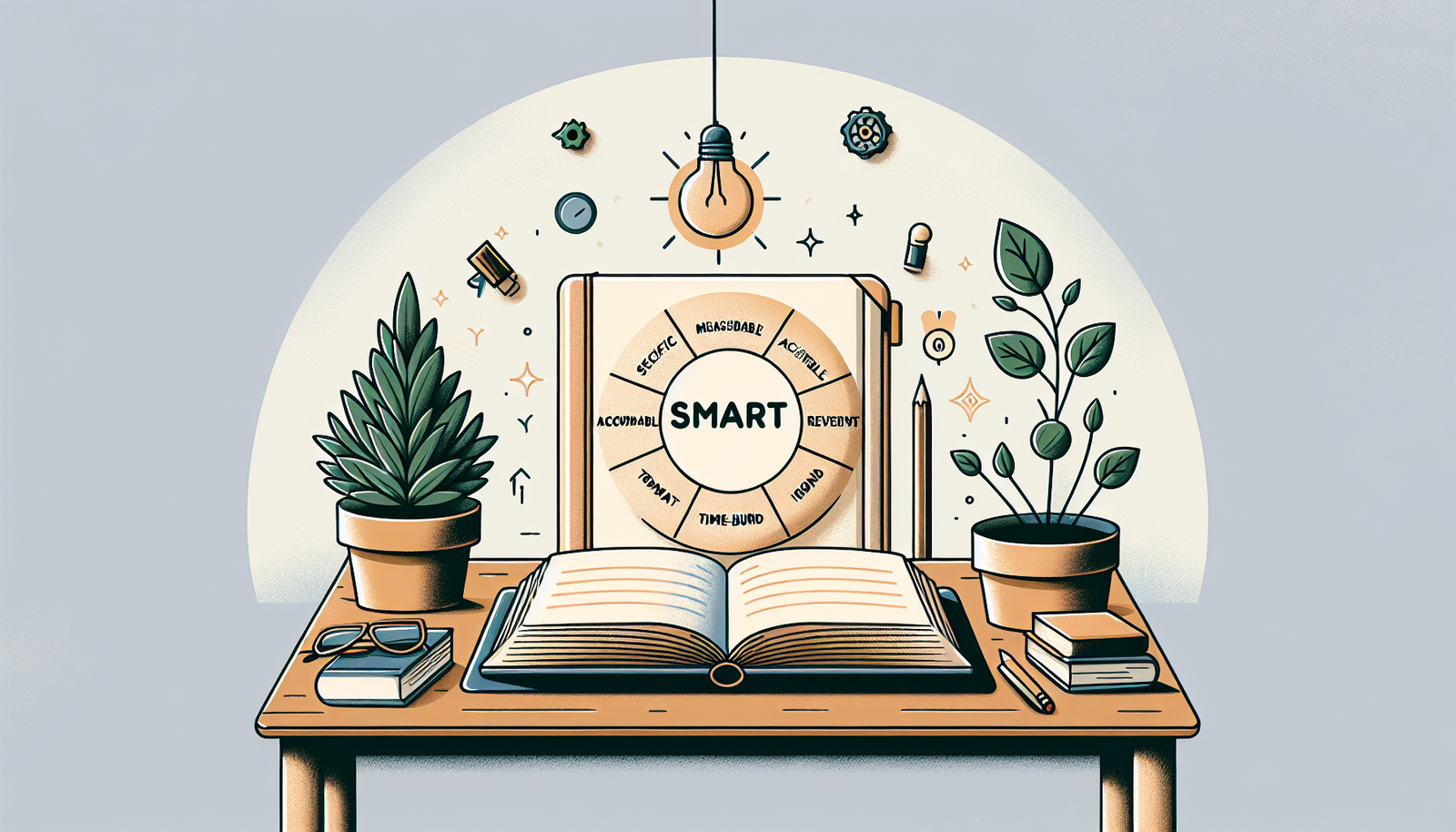
Setting Clear Learning Objectives
Clear objectives are the backbone of measurable learning outcomes. If your objective is vague (“students will understand photosynthesis”), your assessment will be vague too.
I recommend writing objectives using SMART, but with a twist: make sure the verb tells you what evidence you can collect.
For example, instead of:
“Students will understand photosynthesis.”
Use something like:
“By the end of the unit, students will be able to explain the process of photosynthesis and correctly identify the roles of light and chlorophyll in a written response.”
Then, align each objective to a specific assessment task. Here’s a simple mapping approach I’ve used:
- Outcome: Explain photosynthesis process
- Assessment: 6-item quiz + 1 written prompt
- Scoring: mastery = 5/6 on quiz and rubric score ≥ 3/4 on explanation quality
Sharing objectives with students also helps. If they know what “good” looks like, they can self-check while they practice instead of waiting for the grade.
That alignment is what lets your results actually reflect progress toward mastery—not just test performance.
Using Feedback to Improve Learning
Feedback is where measurement turns into improvement. The problem is most feedback is either too late (“you’ll see this next month”) or too generic (“review your notes”).
In my experience, the best feedback has three ingredients:
- Timing: quick enough to act on.
- Specificity: points to the exact criterion or misconception.
- Next step: tells students what to do differently.
So what does that look like in practice?
- Use quick polls or short quizzes mid-lesson to surface misconceptions.
- Group responses by the wrong idea (not by who scored lowest overall).
- Do a 5-minute reteach targeted to the top misconception.
- Give one new item that measures the same outcome but with a slightly different context.
For example, employing platforms like Nearpod can help you grab instant evidence, then you can adjust instruction immediately.
Also, don’t skip structured check-ins. I like a weekly “two things I got right / one thing I’m working on” reflection tied to the rubric criteria. It’s simple, but it makes feedback more actionable.
Peer feedback can work too—just ensure you train students on what quality looks like. Otherwise, peer comments turn into “I liked it” instead of outcome evidence.
Common Challenges in Measuring Learning Outcomes
Let’s be honest: measuring learning outcomes is hard. The challenges are predictable, and you can plan for them.
Challenge 1: Assessment alignment
If your learning objective says “apply,” but your quiz only tests recall, your results won’t reflect the outcome. Fix it by doing an outcome-to-item check: every assessment item should connect to one outcome (or one rubric criterion).
Challenge 2: Bias
Bias can show up in scoring (especially with subjective tasks) and in who feels comfortable performing. Fix it by anonymizing rubric scoring when possible and using clear criteria with examples of performance levels.
Challenge 3: Limited resources
Not every school has advanced assessment tools. But you don’t need fancy software to measure outcomes well. A paper-based exit ticket with two aligned questions can be just as informative as a digital dashboard—especially if you analyze it consistently.
Challenge 4: Not everything fits neatly into numbers
Emotional and social skills, collaboration, and attitudes don’t always produce clean quantitative data. That’s okay. Use qualitative evidence (structured reflections, observation rubrics) alongside numeric indicators like attendance, participation, or completion—then interpret them together.

Best Practices for Assessment
If you want your assessment results to be trustworthy, follow a few best practices. I treat these like the “non-negotiables.”
1) Align assessments to objectives
Every question or task should measure something you explicitly said you’d teach. If you can’t point to the objective, remove or rewrite the item.
2) Use a variety of assessment methods
Mix written checks, performance tasks, and projects so you’re not only measuring one kind of strength. This also helps when students struggle for different reasons.
3) Keep the environment low-stress
Students perform better when they’re not panicking. That doesn’t mean “make it easy.” It means clear expectations, calm instructions, and rubrics that tell them how to succeed.
4) Make results transparent
Students should know what they did well and what to improve. If all they get is a score, you’ve wasted the measurement.
Want a concrete rubric example? Here’s a simple 4-criterion rubric snippet you can adapt for a written response:
- Criterion A: Claim (1–4) — Does the response clearly state the main idea?
- Criterion B: Evidence (1–4) — Does it use accurate support (facts, observations, data)?
- Criterion C: Reasoning (1–4) — Does it explain how evidence supports the claim?
- Criterion D: Clarity (1–4) — Is it organized and easy to follow?
When you score with criteria like this, you can also report outcomes by domain (not just “overall grade”).
Analyzing and Interpreting Results
Once you have results, analysis is where most teams either get clarity or create confusion. I’ve seen both.
Start by breaking the data down into manageable parts:
- Mastery rate per outcome: what % met the target?
- Item/topic breakdown: which questions or criteria were most missed?
- Distribution: where are scores clustering (not just the average)?
- Participation context: who didn’t submit/participate and how does that affect interpretation?
Then interpret trends with a simple rule: the “big miss” tells you what to change. If students consistently miss the same rubric criterion, reteach that criterion. If they miss one quiz item type, review that skill.
Visuals help too—charts or graphs make it easier to spot patterns quickly. A bar chart of mastery per outcome is usually more useful than a spreadsheet full of numbers.
Finally, use the insights to tweak instruction. The goal isn’t to “prove students failed.” It’s to improve the learning pathway so more learners reach the outcome.
Applying Learning Outcome Measurements for Improvement
Measurement only matters if it changes something. Here’s the improvement cycle I recommend:
- Step 1: Share results with students in plain language. Use rubric language (“reasoning” and “evidence”), not just “you got a 62.”
- Step 2: Identify which outcomes need attention by mastery rate and missed criteria.
- Step 3: Decide the response—reteach the skill, adjust how you explain it, or provide targeted practice.
- Step 4: Reassess with a similar task to confirm improvement.
If a significant portion of the class struggled with a concept, I treat it as a cue to revisit the teaching approach—maybe the example wasn’t clear, maybe the practice didn’t match the outcome, or maybe the pacing was too fast.
You can also differentiate instruction using the data. For instance:
- Create small groups for students who missed the same rubric criterion.
- Provide extra practice sets that mirror the assessment format.
- Offer extension tasks for students who already met mastery so you don’t slow down the whole class.
And yes, regular review sessions help—especially when they’re built around the outcomes students missed, not random “extra worksheets.”
When you treat assessment as an ongoing feedback loop, both educators and students benefit. You’re not just collecting data; you’re building a better learning experience.
FAQs
Learning outcomes are specific statements describing what learners should know or be able to do by the end of a course or program. They’re the goals that guide both teaching and assessment—so your activities and tests should map back to them.
You measure learning outcomes effectively by using assessments that directly match the outcomes (formative + summative), scoring with rubrics when tasks are performance-based, and analyzing results by outcome—not just overall grades. If you can’t connect an assessment item to a specific outcome, it probably shouldn’t be there.
The biggest challenges are vague objectives, misaligned assessments, and scoring bias—especially on subjective tasks. Limited time or tools can also make consistent measurement difficult. And not every outcome (like attitudes) fits neatly into numbers, so you’ll need qualitative evidence too.
Use feedback to close the gap between where students are and where the outcome requires them to be. That means timely feedback, clear rubric-based comments, and at least one specific next step. When you pair feedback with a follow-up reassessment, you can confirm whether improvement actually happened.