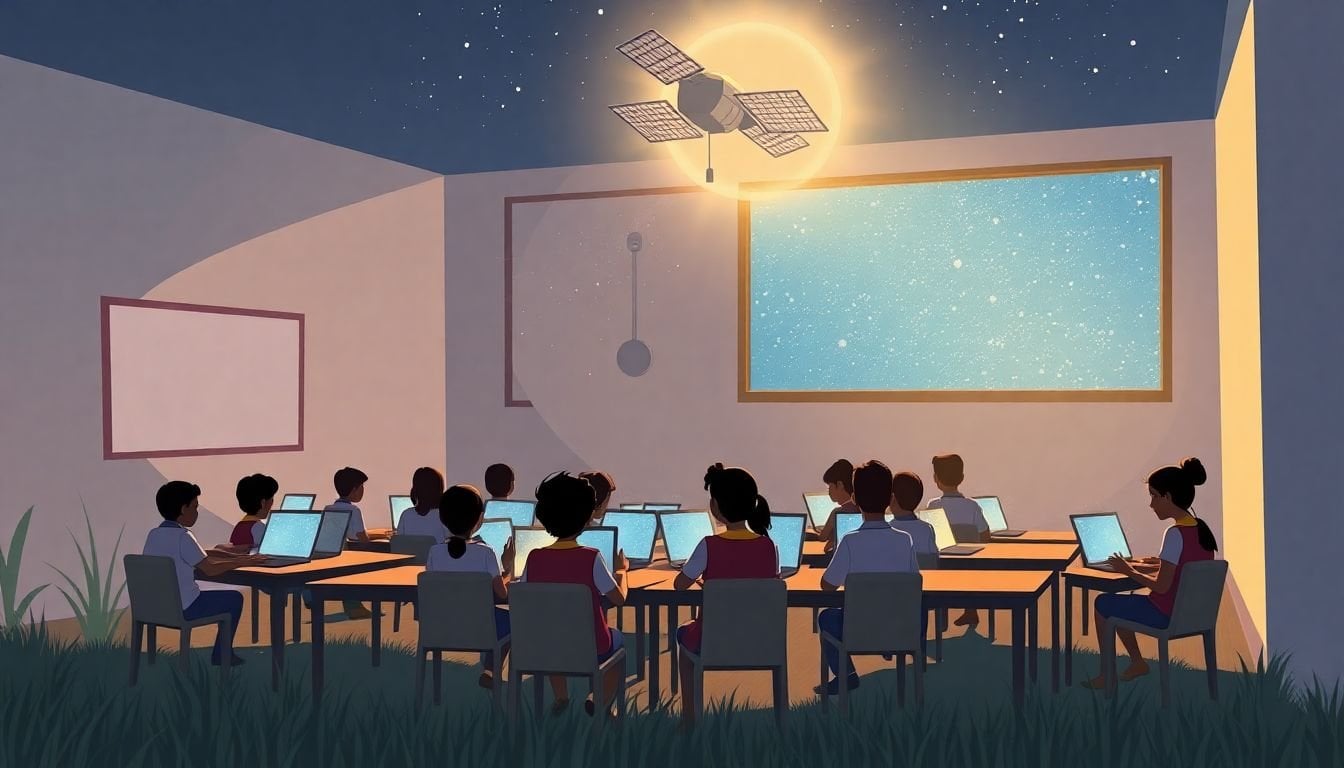
Space-Based Internet Implications for Global eLearning: How It Expands Access
Education shouldn’t depend on whether you live near fiber, a cable line, or a reliable cell tower. That’s the part that bothers me. When connectivity is spotty, learning becomes a guessing game—will the lesson load, will the video buffer, will the assignment upload before the connection drops?
Space-based internet (yes, the satellite kind) is starting to change that equation. In my experience, the biggest difference isn’t just “internet exists.” It’s whether learners can consistently reach the same learning materials, at the same times, with enough stability to participate in class and complete coursework. Satellite networks are aiming right at that need.
So let’s talk about what space internet could realistically mean for global eLearning—what’s working, what still needs fixing, and how course teams can design for the reality of satellite latency instead of pretending everyone has perfect broadband.
Key Takeaways
– Space-based internet uses satellite networks to deliver connectivity in remote and rural areas where traditional broadband is unavailable or unreliable. For eLearning, that means learners can access LMS content, live sessions, and digital resources from much farther away.
– Better connectivity can reduce the digital divide, but it doesn’t fix everything by itself. You still need offline-friendly course design, realistic expectations for latency, and support for device access and data limits.
– With improved satellite links, you can support richer learning experiences like live webinars, interactive quizzes, and high-quality video. The trick is building for high latency: shorter videos, downloadable materials, and asynchronous participation options.
– The online education market is growing fast (often cited around $325 billion by 2025), and MOOC growth is strong too. Satellite connectivity helps expand the addressable learner pool—especially where fiber rollout is slow.
– If you’re planning satellite-based course delivery, don’t skip the operational basics: check coverage, confirm terminal/equipment compatibility, run a pilot, and measure outcomes like completion rates, buffering frequency, and lesson rewatch behavior.
– Engagement improves when course content matches the network reality. I’ve seen learners stick with programs longer when lessons are broken into “watch/download/answer” steps instead of long streaming sessions that stall mid-way.
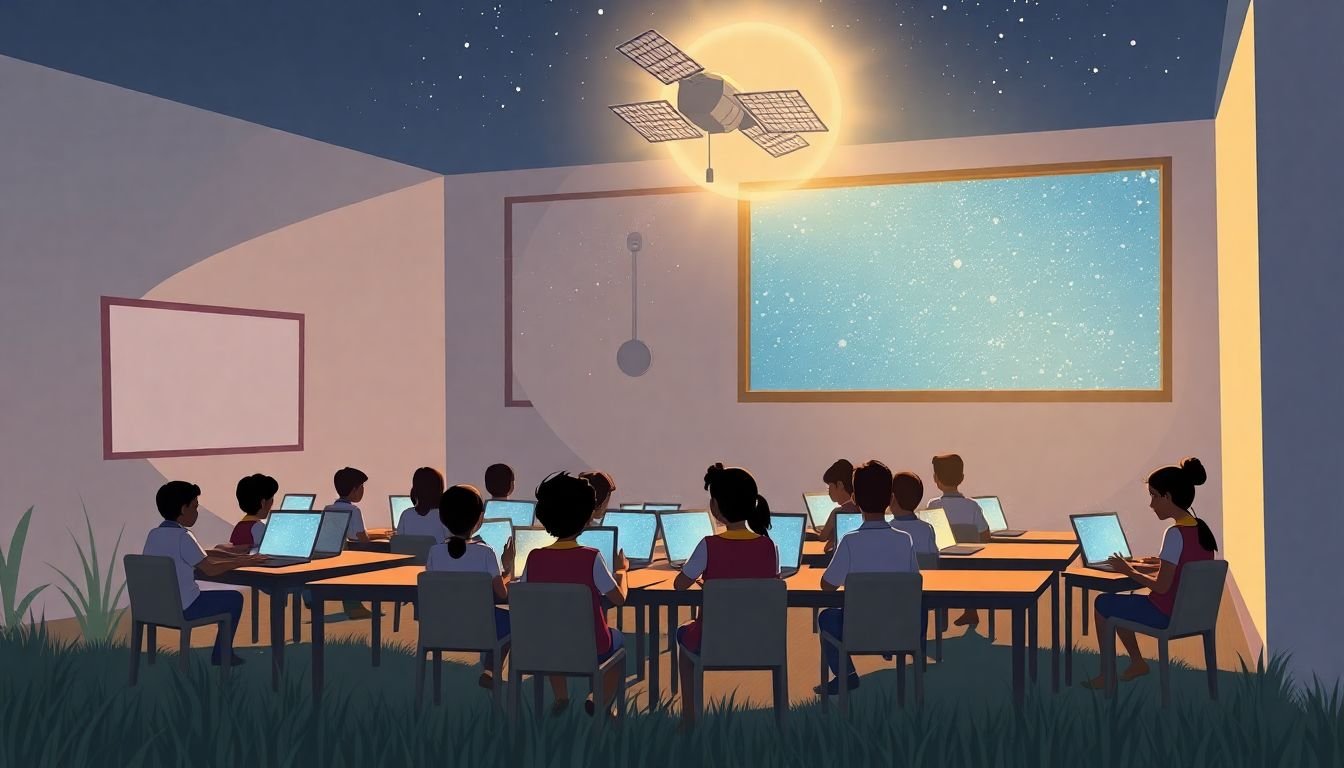
Space-Based Internet: What It Changes for Global eLearning
Space-based internet is mainly delivered through satellite networks, and the big promise is simple: connectivity even when you’re far from traditional infrastructure.
This matters most in remote or rural areas where fiber and cable don’t exist—or where service is too slow and inconsistent to support real learning activities. It’s one thing to “load a page.” It’s another thing to join a live class, submit an assignment, and watch a short lecture without it stalling every few minutes.
Companies like Starlink and OneWeb are building low Earth orbit satellite constellations to bring high-speed internet to more places. For eLearning teams, that translates to more learners being able to access online courses, webinars, and learning resources that used to be limited to cities.
One detail people often miss: satellite links can be “fast enough” for video and uploads, but they don’t behave like fiber. Latency (the delay between sending and receiving data) can still be noticeable. If your course experience depends on instant responses, you’ll feel that.
In my experience, the best results come when educators treat satellite internet as a different kind of network—then design the learning flow to match it.
Expanding Access to Education Worldwide
Let’s make this concrete. Picture a student trying to keep up with a syllabus while their internet only works reliably at certain hours. Or a learner in a rural region where the “online option” is basically unusable during peak times.
Satellite connectivity helps break that pattern. It can expand access to schooling and training programs in regions that have been offline or under-connected for years, which is exactly what drives the most urgent education gaps.
On the demand side, India is often cited as a major growth market for satellite internet. The expectation is that satellite user numbers could nearly triple by 2025, which would open up learning opportunities for a large population of students and adult learners.
So if you’re building an online course and you care about reach, it’s worth planning for satellite users early. That means:
- assume higher latency than you’d see in urban broadband
- offer offline access to core materials
- give learners ways to participate asynchronously when live sessions get hard
As for low-cost access models: instead of vague “someone might subsidize it,” the practical approach is to work with providers and local partners to structure community deployments (schools, learning centers, libraries) and negotiate data plans that make sense for education schedules. That’s usually where the real adoption happens—less so with fully individual, pay-as-you-go setups.
Enhancing Learning Experiences Through Technology
Satellite internet can support more than basic browsing. When the connection is stable enough, you can deliver virtual labs, live video lessons, and interactive quizzes—without the constant buffering that kills momentum.
I’ve noticed that the “feel” of learning changes when students can actually watch the lesson when it’s scheduled. It’s not just convenience; it affects participation and completion. If learners miss chunks due to loading issues, they fall behind fast.
For example, streaming educational videos becomes practical in areas where fiber or cable networks don’t reach. And live assessments can be more reliable when connectivity is consistent enough to support real-time submission.
Still, you don’t want to build a course that only works when everything goes perfectly. High-latency networks benefit from course designs like:
- shorter videos (think 5–10 minutes) so a drop in connection doesn’t waste a whole lesson
- downloadable assets (PDFs, slide decks, worksheets) so students can keep studying even if bandwidth dips
- asynchronous participation (recorded replays, discussion prompts, offline submissions)
- local caching where possible (so learners don’t re-download every time they reopen the course)
What’s the goal? Learners should be able to progress even when the network isn’t perfect.

Growing Market and Opportunities for Online Education
Zooming out, the numbers behind online education are hard to ignore. The global eLearning market is often projected around $325 billion by 2025, and MOOC growth is substantial too (frequently cited as a CAGR over 32%, reaching roughly $25.33 billion by 2025).
What I take from that: demand is already there. The bottleneck is access and consistency. Satellite internet can remove part of that bottleneck by expanding where learners can realistically connect.
In some forecasts, satellite user growth in places like India could ramp quickly—potentially reaching around 2 million users by 2025 in certain scenarios. That’s a lot of new learners who previously couldn’t rely on stable connectivity for coursework.
And it’s not just education demand. The satellite internet market itself is expected to grow dramatically over the next decade (commonly cited ranges include growth from about $14.7 billion in 2023 to $188+ billion by 2033). More investment usually means better coverage, more competition, and—eventually—more affordable options.
If you’re deciding how to package courses for different connectivity levels, it helps to compare platforms and features. Learn more about the evolving online education space at comparing online course platforms.
Steps to Use Satellite Internet for Course Delivery
This is the part most articles skip. “Use satellite internet” sounds simple, but the real work is operational. Here’s a practical checklist I’d actually follow if I were rolling out a course to satellite-connected learners.
- Check coverage for each target site. Don’t assume “the country has it” means your specific school or community will have a usable signal. Use provider coverage maps and confirm with local installers where possible.
- Plan for equipment compatibility. Most consumer and business satellite setups include a terminal (often a dish/antenna) plus a router/modem unit. You’ll want to confirm power requirements, mounting options, and whether your learners will use the internet via Wi‑Fi on phones/laptops or through a local network at a learning center.
- Set content targets based on latency and bandwidth. I like to aim for lessons where the “must-have” content can load in small chunks. If you can’t guarantee consistent throughput, design for downloads and replays rather than relying on long continuous streaming.
- Build offline-first learning assets. Provide downloadable PDFs, slide decks, reading passages, and worksheets. For quizzes, allow offline completion and later sync when the device reconnects.
- Run a pilot before scaling. Pick one rural site and measure what matters: page load success rate, video start success rate, buffering frequency, time-to-complete lessons, and quiz submission completion. Then compare against a baseline (even if it’s small).
- Coordinate with providers for education-friendly plans. If you’re deploying at scale through institutions, ask about bulk, community, or education pricing. Providers like Starlink and OneWeb are starting to support business and institutional use cases—your best bet is to talk to them early about data plans and expected performance.
- Design bite-sized lesson flow. Keep core videos under 10 minutes where possible, and add clear “next step” prompts (“download worksheet,” “answer 5 questions,” “submit when connected”).
Sample pilot plan (simple but effective): run a 2–3 week pilot with 30–100 learners. Track (1) how many successfully open each lesson, (2) how many complete the end-of-lesson quiz, (3) average time-to-complete, and (4) the top 3 failure points (video doesn’t start, uploads fail, login issues, etc.). Then iterate on the lesson structure before rolling out to more sites.
That’s how you avoid building a course that looks great in a studio but breaks in the field.
Innovative Ways to Maximize Engagement in Remote Learning
Satellite internet makes it possible to stream learning content in places that used to be stuck with text-only or offline packets. That opens up engagement options—but you still need to be smart about how you use them.
Here are strategies that tend to work well when connections aren’t perfect:
- Video tutorials + short checkpoints: record lesson segments and insert quick knowledge checks every 5–10 minutes so learners stay active.
- Virtual labs with lightweight interactions: if full interactive simulations are too heavy, use downloadable lab sheets and capture results offline, then upload later.
- Live Q&A with a replay option: schedule live sessions, but always provide a recording and a structured recap so learners who miss the live moment don’t fall behind.
- Offline-first worksheets and quizzes: learners can complete tasks without continuous streaming. Then the system syncs when they reconnect.
Also, don’t underestimate the power of pacing. I’ve seen dropout rates drop simply because the course stopped asking learners to commit to 45 minutes of uninterrupted streaming. When lessons are broken into smaller chunks, students feel progress sooner—and they’re more likely to come back tomorrow.
For assessment design, use tools like quizzes and assessments to reinforce learning without forcing constant live interaction.
And yes—keep it human. Encouraging messages, clear weekly goals, and student success stories matter even more when learners are dealing with connectivity stress.
Creating and Selling Online Courses in the Satellite Era
If you want your course to reach learners anywhere, you need more than good content. You need a delivery plan that respects network constraints and a pricing approach that matches real affordability.
Here’s how I’d structure it:
- Lesson design: keep modules concise, include visuals, and prioritize downloadable content so learners can study even if streaming is unreliable.
- Pricing: consider tiered pricing (for example, a standard price and a reduced “community” or “education” tier) or scholarships through partner organizations.
- Platform fit: choose tools that support caching/offline-friendly experiences, reliable media delivery, and easy quiz workflows.
- Local partnerships: work with schools, NGOs, or community learning centers that can provide devices and a stable “learning hour” environment.
If you’re unsure about platform choices, check out a guide comparing online course platforms to find what best supports satellite-friendly delivery.
Promotion matters too, but I’d keep it grounded: social media works, sure, but local partnerships and direct outreach often drive the first enrollments in satellite-connected regions. People need to know this course is actually usable where they live.
When you do that right, you’re not just selling online education—you’re expanding who gets to learn.
FAQs
Space-based internet can reach learners in remote and underserved areas, letting students and educators access online learning materials regardless of local infrastructure. The result is fewer “offline by default” learning gaps and more consistent access to courses, assignments, and educational resources.
Low Earth orbit satellite constellations, improved bandwidth, and more robust communication systems are the key advances. Together, they make it practical to deliver video, quizzes, and interactive learning experiences in places that previously couldn’t support them reliably.
Space-based internet can reduce educational inequality by improving digital inclusion, supporting lifelong learning, and expanding training opportunities in communities with limited infrastructure. It can also strengthen local education ecosystems when schools and learning centers gain reliable connectivity.
As coverage improves and more capacity comes online, expect better performance for institutions and potentially more education-focused connectivity options. The biggest gains will likely come from combining improved connectivity with offline-friendly course design and stronger local delivery support.