
Gamifying Forums With XP Points: 8 Simple Steps to Boost Engagement
Ever notice how some forums feel a little… flat? People might sign up, lurk for a while, and then slowly stop posting. In my experience, it’s not that they don’t care—it’s usually that there’s no clear “what’s in it for me?” moment. So what I started doing on a couple of community sites was simple: I added XP points for helpful actions, made the points visible, and tied them to concrete milestones.
Here’s what surprised me. Once members can see progress in real time, the forum stops feeling like a one-way street. People don’t just “browse,” they start answering, replying, and sharing resources because they can tell their effort is being recognized. And no, it doesn’t have to turn into some sweaty leaderboard war. If you set it up right, it feels like momentum—not pressure.
In this post, I’ll walk you through 8 practical steps to gamify forums with XP points, including the nitty-gritty rules, the KPIs to watch, and a few anti-gaming safeguards I wish more people implemented from day one.
Key Takeaways
Key Takeaways
- Reward real contributions with XP (replies, questions, resource sharing). The points need to be visible in the UI so members can track progress without hunting around.
- Define earning criteria in plain language—what actions earn XP, how many points each action is worth, and when quality bonuses apply. If the rules are fuzzy, people won’t trust the system.
- Use badges alongside XP for recognition. I like badges that reflect actual behavior (like “Answered 25 Questions”) instead of generic “Top Fan” stuff.
- Track the right metrics: DAU/MAU, posts per active user, reply rate, retention (D30), and “helpful” rates. Then adjust XP values based on what your data shows.
- Keep it fresh with rotating challenges and seasonal rewards. One-time rewards fade fast, but periodic events give people something to come back for.
- Share success stories with specifics. When members see someone like them improving over time, it feels achievable (not like the system is only for power users).
- Keep the mechanics simple and transparent. Fewer actions tracked + clear rules = more trust and less confusion for new members.

Step 1: Use XP Points to Drive Real Forum Participation
Start by rewarding specific, meaningful actions—posting replies, asking thoughtful questions, and sharing resources that actually help someone else. The key is that users should see the XP happen right after they do the thing. No mystery. No waiting around.
When I rolled out XP on a mid-size community (roughly a few thousand members), what I noticed immediately was the “momentum effect.” People still browse, sure—but more of them turned browsing into posting once they could track progress in their profile and on the thread itself.
Make points visible and trackable. If members can’t easily find their XP total, they’ll stop caring. I like showing:
- Current XP total (and level if you use levels)
- Progress toward the next milestone (like “120 XP to Level 3”)
- A short “why you earned this” activity log
For point values, don’t overthink it at first. A starting setup like 10 XP for a well-thought-out answer and 5 XP for reading/reacting is usually enough to feel rewarding without going overboard. But here’s the part people skip: pair XP with feedback. Show members what behavior you value—helpfulness, clarity, and actual contribution—not just activity.
One practical trick: give small milestone bonuses. For example, bonus XP at 100 and 500 points keeps people moving past the “new user” phase. It also gives you a natural place to introduce badges (more on that soon).
Also, watch the vibe. If the forum feels like newcomers are being drowned out by veterans chasing points, you’ll lose people. The goal is rewards that encourage contribution, not a system that turns the place into a popularity contest.
Step 2: Define Clear Criteria for Earning XP Points (and Prevent Farming)
If your XP rules are vague, people will game them. I learned that the hard way. The first version of my setup had “contribute” as a category, and within days, users were posting low-effort content just to trigger the XP. So I tightened it up fast.
Here’s what works: list exact actions and exact point values. For example:
- Original post (new thread): 15 XP
- Reply / answer: 10 XP
- Useful reaction (like “helpful”): 2–5 XP
- Resource share (link + summary): 8 XP
Then add quality bonuses. Instead of giving the same XP for every reply, boost XP for answers marked as helpful/correct. That might be +5 XP when a moderator confirms, or +3 XP when multiple users upvote it.
Transparency matters. I recommend publishing a simple XP guide that looks like this:
- Action
- Base XP
- Quality bonus (if any)
- Notes (what counts as “helpful”)
Now, about anti-gaming safeguards. These are the guardrails I’d implement from day one:
- Rate limits: cap XP for reactions per day (example: max 50 reaction XP/day).
- Spam checks: block XP for posts that fail moderation, get removed, or are flagged.
- Quality thresholds: require a minimum character count or prevent XP for “thanks!”-only replies.
- Delay large bonuses: if you’re awarding a big bonus for correctness, apply it after review instead of instantly.
Finally, be willing to adjust. After the first couple of weeks, review what actions correlate with meaningful outcomes (like threads that stay active, helpful votes, or accepted answers). If low-quality posts are rising, don’t just “increase moderation”—adjust XP values and quality rules too.
Step 3: Combine XP Points with Badges for Recognition
XP is great for progress. Badges are great for identity. Put them together and users feel like they’re building something, not just collecting numbers.
For example, when someone hits 100 XP, unlock a badge like Helpful Contributor and show it on their profile and in the thread header. That visual cue does a lot of work. People love being recognized—especially when it’s tied to behavior they can repeat.
Here’s the approach I prefer: badges should reflect specific contributions, not generic status. Instead of “Top Member,” try:
- Answered 50 Questions
- First Helpful Reply
- Community Helper (earned by receiving helpful votes)
- Consistent Contributor (active on 10 different days)
You can also use tiered badges like bronze/silver/gold so progression feels natural. Just make sure each tier has a clear requirement. Opaque badges kill motivation because people can’t tell what to do next.
And yes, display matters. If badges only show up in an admin panel, nobody will care. Put them where users already look: profile page, post author card, and maybe a “badges earned” widget on the forum home.
One more thing: if you use leaderboards, consider keeping them secondary. In my experience, leaderboards can attract power users but also intimidate newcomers. Badges feel friendlier because they reward milestones, not just ranking.
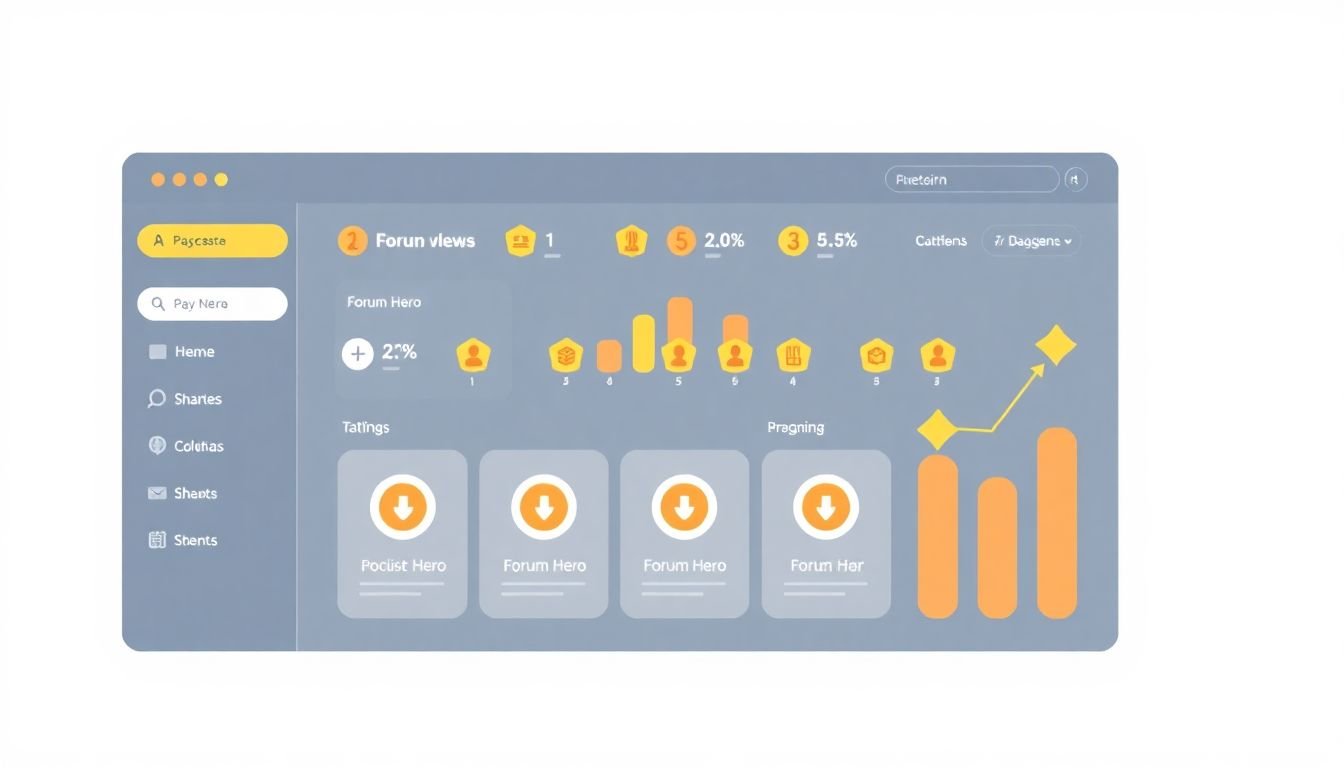
Step 9: Use Analytics to Monitor and Improve Your Gamification Strategy
Here’s the truth: XP systems don’t “set and forget.” You need to watch behavior and adjust. Otherwise, you’ll end up rewarding the wrong thing (usually the fastest thing).
Track participation and quality with a mix of forum metrics and reward metrics. If you only monitor one number, you’ll miss the story behind it. In my setups, I check:
- DAU/MAU (are people actually active?)
- Posts per active user (is output going up?)
- Reply rate (are questions getting answered?)
- Retention (D30) (do people stick around past the novelty?)
- Helpful rate = helpful votes / total replies (quality signal)
- XP redemption rate (if you have XP to unlock anything)
Instrument events so you can connect actions to XP awards. For example:
- event: thread_created → xp_awarded: 15
- event: reply_created → xp_awarded: 10
- event: reply_marked_helpful → bonus_xp_awarded: +3
- event: post_removed_for_violation → xp_reversed / xp_suppressed
Then set simple decision rules. A few examples I’ve used:
- If helpful rate drops by more than 20% after XP launch, reduce XP for low-effort actions or tighten quality bonuses.
- If activity spikes in week 1 but D30 retention falls, your rewards might be too “easy” and not tied to long-term value.
- If a small group dominates XP, consider milestone-based badges instead of only ranking-based incentives.
Dashboards help too. I like a simple weekly view: engagement, retention, helpful rate, and “top XP earners vs. median contributor.” That last part is important—if the median user isn’t benefiting, the system won’t spread.
And if you want extra ideas for analyzing content performance, you can also check https://createaicourse.com/lesson-writing/ for approaches to evaluating and improving online materials, which you can adapt to forum content quality checks.
Step 10: Keep the System Fresh with New Challenges and Rewards
Nobody wants to do the same thing every day forever. XP helps, but only for so long. What keeps engagement alive is a steady rhythm of “something new is happening.”
Try challenges that are easy to understand and fun to participate in:
- Weekend trivia: 20 XP for correct answers + 5 XP for explaining your reasoning
- Themed posting days: “Share your best template” day, with bonus XP for posts that include examples
- Help-a-thon: “Answer 10 questions this week” with a badge at 10 and 25
Seasonal rewards work well because they feel timely. Think “1-year member” badges or holiday-themed XP boosts. Just don’t make them so frequent that they lose meaning.
One of my favorite tactics: let members suggest challenges. Give them a simple submission form and run the best ideas monthly. It creates ownership, and people are more likely to participate when they feel heard.
Also, balance personal goals and community-wide goals. Personal goals keep motivation steady; community goals create shared energy. A campaign like “Help 10 new members” (with bonus XP for the helper) can drive real onboarding value, not just raw posting volume.
Finally, don’t let the system become a chore. If every day feels like a task list, people will burn out or disengage. Gamification should feel like encouragement, not homework.
Step 11: Use Stories and Examples to Show Success
People don’t just want rewards—they want proof. When you show what “good” looks like, newcomers can copy the behavior without guessing.
Here’s a real-world style example (based on what I’ve seen work in communities): a new member joins a tech forum, posts their first question in week 1, and gets a reply. Over the next few weeks, they respond to other threads and earn a couple of badges. By week 4, they’re leaving helpful follow-ups instead of just asking questions. That progression is exactly what you want to highlight.
When you share stories, include specifics:
- What the member did (ask a question, answer, share a resource)
- Which badge(s) they earned
- Rough timeframe (example: “in 30 days”)
Even better if you can tie it to outcomes. If someone says they used the forum to solve a problem, learn something, or get recognized by the community, it makes the XP system feel meaningful—not random.
You can run weekly or monthly spotlights on active members. Keep it short: a screenshot of their post + a 2–3 sentence explanation of why it helped. Peer recognition is powerful because it feels earned, not manufactured.
And don’t underestimate simple gestures. A “shoutout” for a helpful reply can sometimes do more than a badge—because it’s personal. Use both and you’ll get the best of the two worlds.
Step 12: Keep It Simple and Fun — Avoid Overcomplicating Things
I get it—gamification can be tempting. You can add dozens of mechanics: quests, streaks, crafting, XP multipliers, hidden missions… but more complexity usually means less trust.
Start with a straightforward system:
- Base XP for core actions (post, reply, helpful reaction)
- Quality bonuses (helpful/correct markers)
- Badges for milestones
Then let it evolve based on feedback and data. If users don’t understand how points work within a week, the system won’t stick.
What to avoid:
- Opaque scoring (no one knows why they earned XP)
- Too many tracked actions (confusing for new members)
- Over-aggressive leaderboards (can discourage newcomers)
- Complex leveling formulas (feels like bureaucracy)
Make earning XP intuitive. Posting, replying, and sharing resources should be the obvious routes to points. And keep rewards light and fun. Titles like “Forum Hero” or “Helpful Hacker” can add personality without needing complicated mechanics.
Use visual cues so achievements feel real: progress bars, badge icons, and a quick “XP earned” activity feed. When people can see progress instantly, they’re more likely to come back and try again.
At the end of the day, the best XP system feels like encouragement. It’s not about turning the forum into a game. It’s about making helpful participation easier to notice, reward, and repeat.
FAQs
XP points encourage participation by giving members an immediate, visible reward for contributing. When people can track progress (and see what actions earn points), they’re more likely to post replies, ask better questions, and share useful resources—because effort feels recognized.
Good criteria are specific and behavior-based: posting original content, replying with helpful answers, initiating discussions, providing useful feedback, and sharing resources with context. The clearer the action + point value, the easier it is for members to understand how to earn XP (and avoid spammy behavior).
XP points track ongoing activity and progress, while badges provide visible recognition at milestones. Together, they motivate users both ways: XP makes the next step clear, and badges give them something to show off on their profile.
Leaderboards can boost participation by adding a light competitive element. They highlight top contributors and can motivate others to improve. That said, I recommend using them carefully—milestone badges and quality-based XP often feel more welcoming to newcomers than ranking alone.