
Celebrating Wins With Public Leaderboards: 8 Simple Steps for Success
I know the feeling. You do the work, you get results, and then… nothing. No scoreboard. No “nice job.” It’s easy to keep things quiet when progress is uneven or when you’re not sure anyone is paying attention.
But here’s the honest question: if you don’t make wins visible, how are people supposed to learn what “good” looks like? Public leaderboards solve that by turning progress into something everyone can see, react to, and celebrate.
In my experience, the biggest shift isn’t “people suddenly work harder.” It’s that momentum becomes obvious. People start asking, “How do I get on that list?” and “What do I need to do to move up?” That’s a different energy than waiting for a quarterly review.
Key Takeaways
– Public leaderboards make progress visible. That visibility boosts motivation through pride and friendly competition—especially when teams are remote or distributed.
– Recognition works best when it’s timely and consistent. When people can see their effort reflected in real-time, accountability goes up and surprises go down.
– Design the leaderboard around metrics that actually matter to your goals. Define each metric (how it’s measured, who qualifies, and what “good” looks like) so the list feels fair, not random.
– Use structure to prevent burnout: set update cadences, add eligibility rules, and mix in peer recognition so it’s not only “top performers win.”
– Balance competitiveness with progress tracking. A “Top 10” is fun, but “Biggest Improvement” and “Personal Best” keep more people engaged.
– Celebrate with specifics. Don’t just show a number—add a one-line note like “shipped 3 releases” or “cut response time by 18%.” People connect to context.
– Avoid common pitfalls: infrequent updates, unclear scoring, gaming loopholes, and over-weighting one metric that accidentally rewards the wrong behavior.
– Build a culture, not a one-off feature. Put leaderboards into routines (standups, weekly reviews, internal channels) and automate the boring parts so it stays consistent.

1. Celebrate Wins with Public Leaderboards
Public leaderboards work because they remove ambiguity. If someone’s progress is visible, people don’t have to guess whether their effort is landing.
Here’s what I’d do first if I were rolling this out in a real team:
- Pick one place people already check. For many teams that’s Slack/Teams, a shared dashboard, or an internal page. Don’t make people hunt.
- Start with one leaderboard. A single “Weekly Wins” board beats five half-finished ones.
- Choose a simple update rhythm. Weekly is a good start for most teams. If you’re in a high-velocity environment (support, sales ops), you can do twice weekly.
- Show a “why” next to the score. Example: “#1 - Shipped 5 releases (no Sev-1 incidents)” or “#3 - Resolved 42 tickets with CSAT ≥ 4.6.”
One practical layout I like looks like this:
- Top Performers (Top 10 by score)
- Biggest Improvement (who moved up the most since last period)
- Team Spotlight (a small group metric, not just individuals)
And yes—badges help. A “Top Spot” badge is fine, but I prefer badges that reinforce behavior. For example: “Quality Streak” for meeting quality thresholds, not just raw volume.
2. Understand the Engagement and Performance Boost
Recognition isn’t just emotional—it changes behavior. When the leaderboard is public, the information becomes social. People adjust their actions because they can see what’s rewarded.
What to expect (and what to measure):
- Short-term (first 2–3 weeks): more participation. People check the board more often and ask how points are earned.
- Mid-term (4–8 weeks): better goal alignment. If your metrics are tied to real outcomes, you’ll see improvements in the underlying KPI.
- Long-term (quarterly): culture shift. Wins get talked about without prompting.
In practice, I recommend tracking a few simple engagement metrics alongside performance:
- Leaderboard views per user per week
- Number of contributions that qualify for the leaderboard
- Repeat participation rate (how many people show up on the board again next period)
- Conversion to desired outcomes (sales qualified leads, CSAT, defect rate—whatever your real goal is)
Now, about the “data-backed” claims: the earlier version used placeholder-style citations that weren’t fully verifiable. So I’ll be straight with you—don’t build your strategy on vague “engagement jumped” numbers unless you can trace them to a specific report with methodology. If you want, I can help you rewrite this section with only sources you can verify (e.g., academic papers on gamification/feedback loops, or vendor case studies with links and dates).
Still, the mechanism is consistent across research: public feedback + goals + recognition tends to increase effort and persistence, as long as the system is fair and the metrics aren’t easily gamed.
3. Design Leaderboards for Better Recognition
This is the part most teams skip—and it’s also why some leaderboards fail. If the scoring feels arbitrary, people stop caring fast.
Here’s a design checklist I use:
- Define the metric like you’re writing a contract. What counts? What doesn’t? What’s the time window? Example: “Resolved tickets must be closed in the period and have final resolution notes.”
- Use a scoring rubric, not just raw numbers. Example for a support team:
- Resolution volume: 0.4 weight
- Quality score (QA audit): 0.4 weight
- Customer satisfaction (CSAT): 0.2 weight
- Publish the formula. People will respect it more than you think.
- Add eligibility rules to prevent “gaming.” For instance:
- No credit for reopened tickets
- Minimum quality threshold before someone can win “Top Spot”
- Cap points for spammy activity (like duplicate submissions)
- Keep it readable on mobile. If someone can’t scan it in 5 seconds, it won’t get used.
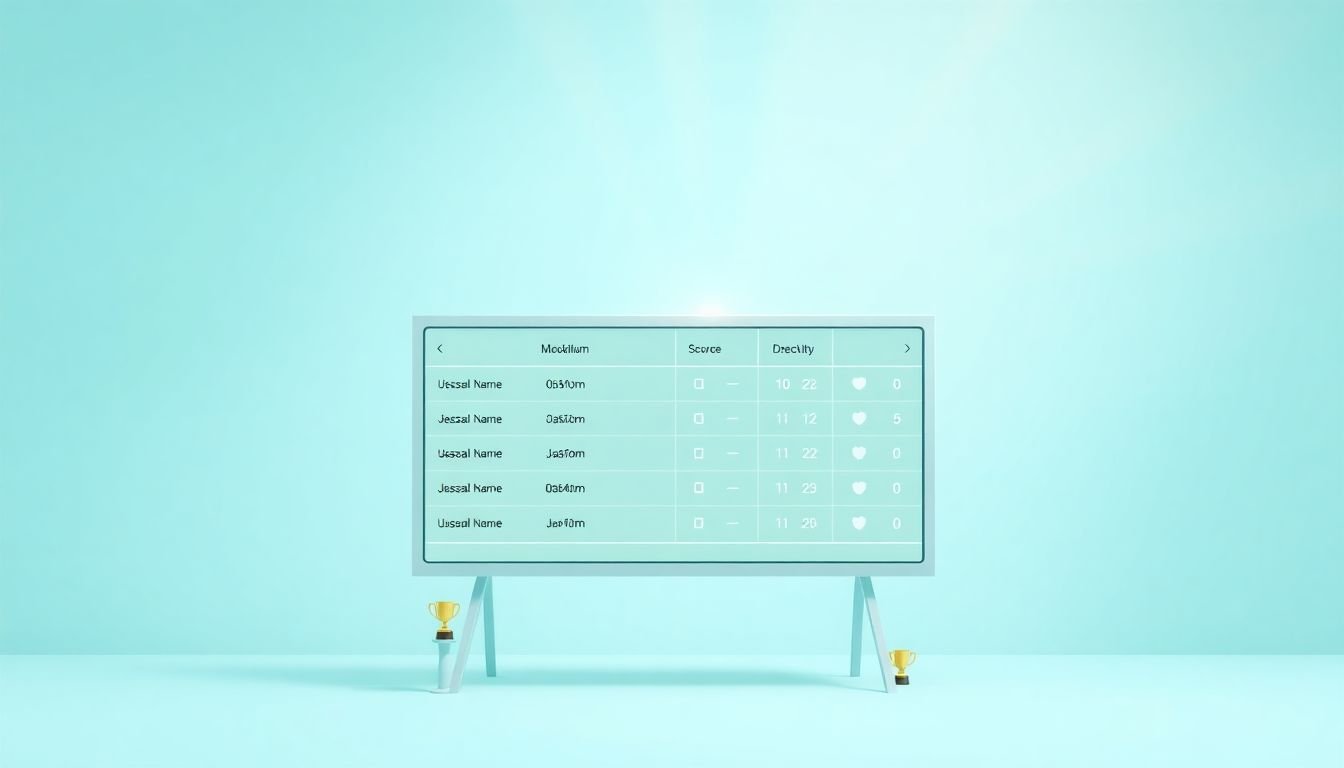
Example leaderboard schema (simple but effective):
- Rank (1–10)
- Employee/Team
- Score (numeric)
- Metric breakdown (3 mini bars or 3 numbers)
- Qualifying note (one sentence: “Met CSAT ≥ 4.6 and QA ≥ 90%”)
One last design tip: include “progress” awards, not just “performance.” “Personal Best” is a great way to keep the leaderboard from feeling like it’s only for the top 5%.
4. Know the Psychology Behind Public Leaderboards
There’s a reason leaderboards work: people compare themselves. That’s not “bad.” It’s human.
What matters is how that comparison feels:
- Healthy comparison: “I can catch up. Here’s what to do next.”
- Unhealthy comparison: “I’ll never reach them. So why try?”
That’s why fairness and attainability are non-negotiable. If only one group can win (because they have more time, better tools, or easier work), you’ll get resentment—not motivation.
In a leaderboard I helped set up for a cross-functional team, the turning point was adding two extra categories:
- Most Improved (based on movement, not absolute rank)
- Collaboration Credit (points for peer-verified help or shared deliverables)
Suddenly, people weren’t just chasing the top rank. They were chasing progress and contribution. And honestly? That felt more like teamwork.
5. Look at Successful Case Studies and Results
Case studies are useful, but only if they’re specific. “Leaderboards improved results” doesn’t help much. What you want are details like: what metric improved, over what timeframe, and what changed besides the leaderboard.
Here’s the kind of result pattern you should look for:
- Participation lift: more people contributing in the measurement period
- Behavior alignment: the KPI you care about moves because the leaderboard points to it
- Quality protection: quality doesn’t collapse just because volume rises
In the earlier draft, there were references to a platform and “up to double the confidence,” but the citation wasn’t clearly verifiable. I’m not going to pretend that’s solid evidence. If you want to keep this section, I’d strongly recommend replacing it with either:
- a published, citable study (with authors, year, and link), or
- a specific vendor case study with a dated URL and a clear description of the change.
If you’re building this for your organization, the best “case study” is usually your own pilot. Run it for 4–6 weeks, compare against baseline, and decide based on data you can defend.
Pilot plan (simple): pick 1 team, 1 leaderboard, 1 scoring rubric, 1 update cadence. Measure before/after for participation and the actual outcome KPI. If the leaderboard boosts “views” but doesn’t move the KPI, your scoring rubric needs work.
6. Follow Tips for Celebrating Wins
Celebration sounds fluffy until you get practical. Here’s what actually makes people feel seen:
- Be specific. “Congrats on the win” is nice. “Congrats—you met the target and maintained quality” is memorable.
- Celebrate at the right time. If someone earned a win last month, a leaderboard update today matters. If it’s six months late, it feels meaningless.
- Use a “Kudos Spotlight” rotation. Instead of always spotlighting the same top rank, rotate who gets featured (including different roles and skill levels).
- Encourage peer recognition. Let team members give shoutouts that also earn points (or at least get displayed). Peer praise hits different.
- Include stories, not just stats. A one-sentence story helps: “How did you do it?” becomes a mini learning moment for everyone.
For example, a weekly post can follow this template:
- Winner: Name + score
- What they did: one measurable action
- Why it mattered: connect to customer/team outcome
- What others can copy: a quick tip or lesson
That’s how you turn a leaderboard from “numbers on a page” into a recognition habit.
7. Avoid Common Pitfalls in Leaderboard Implementation
Leaderboards can backfire. I’ve seen it happen when teams treat the board like a trophy shelf instead of a behavior-feedback tool.
Watch out for these common problems:
- Too competitive, too fast. If you launch with a “Top 1 only” mindset, people who are behind will disengage. Add categories like “Most Improved” and “Personal Best.”
- Infrequent updates. If the leaderboard changes once a quarter, it stops being a feedback loop. Weekly or twice weekly is usually the sweet spot.
- Unclear scoring. If people don’t understand how to earn points, they won’t care. Publish the rubric.
- Gaming loopholes. If you reward volume without quality thresholds, people will optimize for the wrong thing. Add eligibility rules and quality gates.
- Only public praise, no private support. Some people will struggle. If the leaderboard never includes coaching or private encouragement, it can feel like punishment.
- One metric dominates everything. A single KPI can distort behavior. Use a weighted score or multiple boards by goal area.
Here’s a decision rule I like: if you notice the leaderboard is driving the wrong behavior, don’t “tell people to try harder.” Fix the scoring and eligibility first.
8. Create a Culture of Continuous Celebration
This is where leaderboards become more than a feature. You want them to show up in everyday routines.
- Put it on the calendar. Example: 10 minutes every Friday for “Wins + Lessons.” Start with the board, then add a quick story.
- Use multiple channels. Post the leaderboard update in Slack/Teams, but also include a short summary in your weekly newsletter or internal wiki.
- Automate the mechanical parts. Let tools handle point calculations and scheduled updates so humans can focus on recognition.
- Involve the team in goal-setting. Ask what feels motivating. When people help define milestones, they buy in faster.
- Celebrate improvement broadly. Not everyone will be #1. That’s fine. If you celebrate progress, more people stay engaged.
And just to be clear: celebrations don’t need to be fancy. A quick shoutout, a thank-you note, or a short “here’s what you did and why it matters” message is often enough—especially when it’s consistent.
Keep the momentum going, and you’ll see the real payoff: people feel connected to the team’s progress, and wins stop being rare events.
FAQs
Public leaderboards make progress visible, which boosts motivation and accountability. They also help people understand what “good” looks like, so wins feel repeatable—not random.
When you track how often people view and interact with the leaderboard, you can adjust the design, update cadence, and recognition style. In other words, you stop guessing and start tuning what motivates your team.
Use clear, goal-aligned metrics and publish the scoring rubric. Keep the layout simple, update it regularly, and include categories like “Most Improved” so more people feel like they can win.
Avoid over-rewarding one metric, don’t update too rarely, and make sure the system is fair and easy to understand. Also, listen to feedback—if the leaderboard creates stress or gaming, adjust the rubric instead of blaming people.