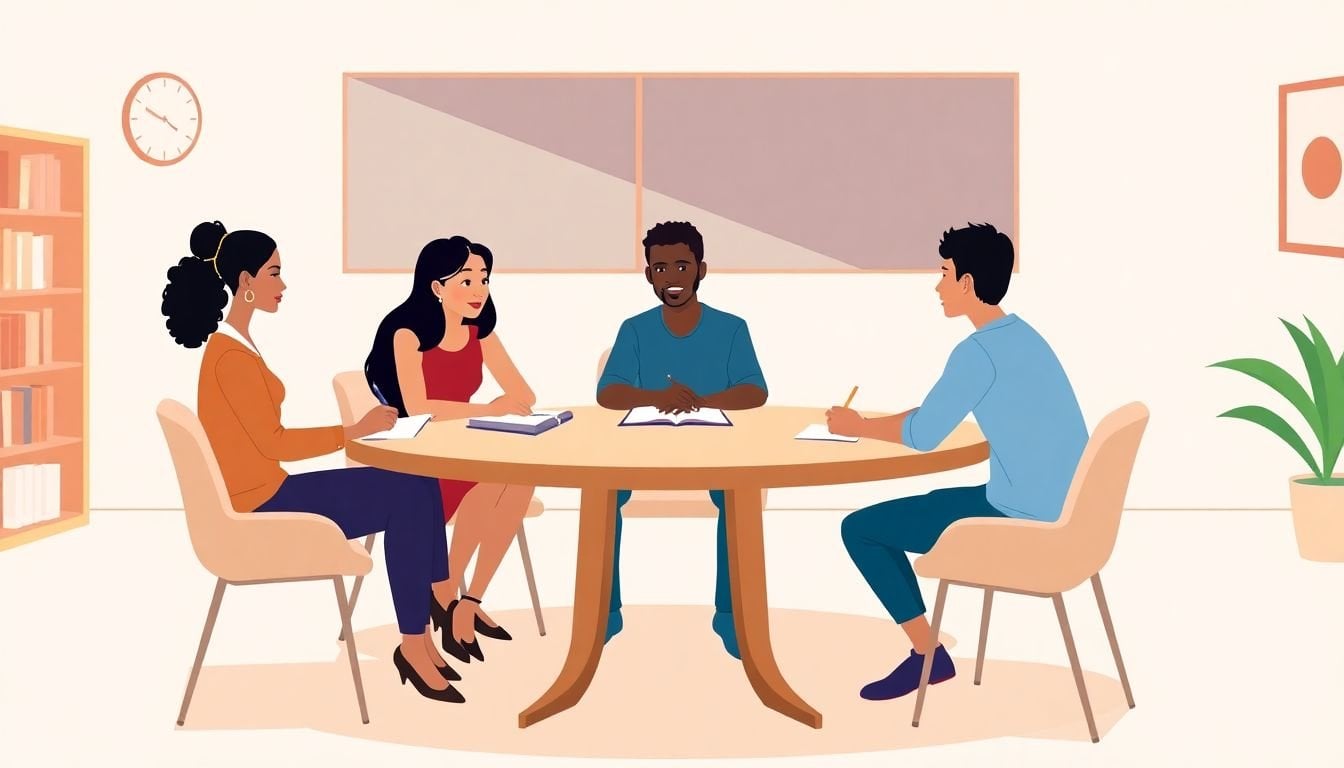
Understanding Cultural Differences in Learning Styles for Better Teaching
I’ve taught in classrooms where the “same lesson” landed completely differently from one student to the next. Some kids leaned in during discussion, others needed a quiet minute to think, and a few only seemed to click once we connected the content to something meaningful from home. That’s where cultural context shows up—not as a stereotype, but as a pattern in how students communicate, participate, and make sense of information.
So yeah, it can feel overwhelming at first. But it doesn’t have to be. What I’ve found works best is getting specific: what you’ll watch for, how you’ll check in ethically, and what you’ll do when your first attempt doesn’t help.
Below, I’ll walk you through a practical way to plan culturally responsive instruction that also respects the reality that “learning styles” are messy. You’ll get classroom-ready strategies, examples you can adapt, and a simple workflow for collecting student feedback without turning your class into a science fair.
Key Takeaways
- Culture affects participation norms (who speaks, how questions are asked, what “respect” looks like), not just “learning preferences.”
- Instead of guessing, observe student behaviors during tasks and ask targeted questions about support needs.
- Regional and linguistic differences can show up through language use, familiarity with school routines, and comfort with authority or group work.
- Use culturally responsive teaching techniques: relevant examples, multiple ways to show understanding, and inclusive classroom visuals.
- Keep curriculum standards at the center, but connect them to students’ lived experiences so the work feels purposeful.
- Technology should widen access (captions, translation options, multimodal formats), not create a “tech that only some students understand” gap.
- Build structured cultural exchange—stories, projects, and partnerships—so sharing doesn’t turn into pressure or performance.
- Use ongoing checks (brief reflections + observation rubrics) to adjust instruction—because preferences shift over time.
- Get feedback, revise your plan, and document what worked. Continuous improvement beats one-time “training.”
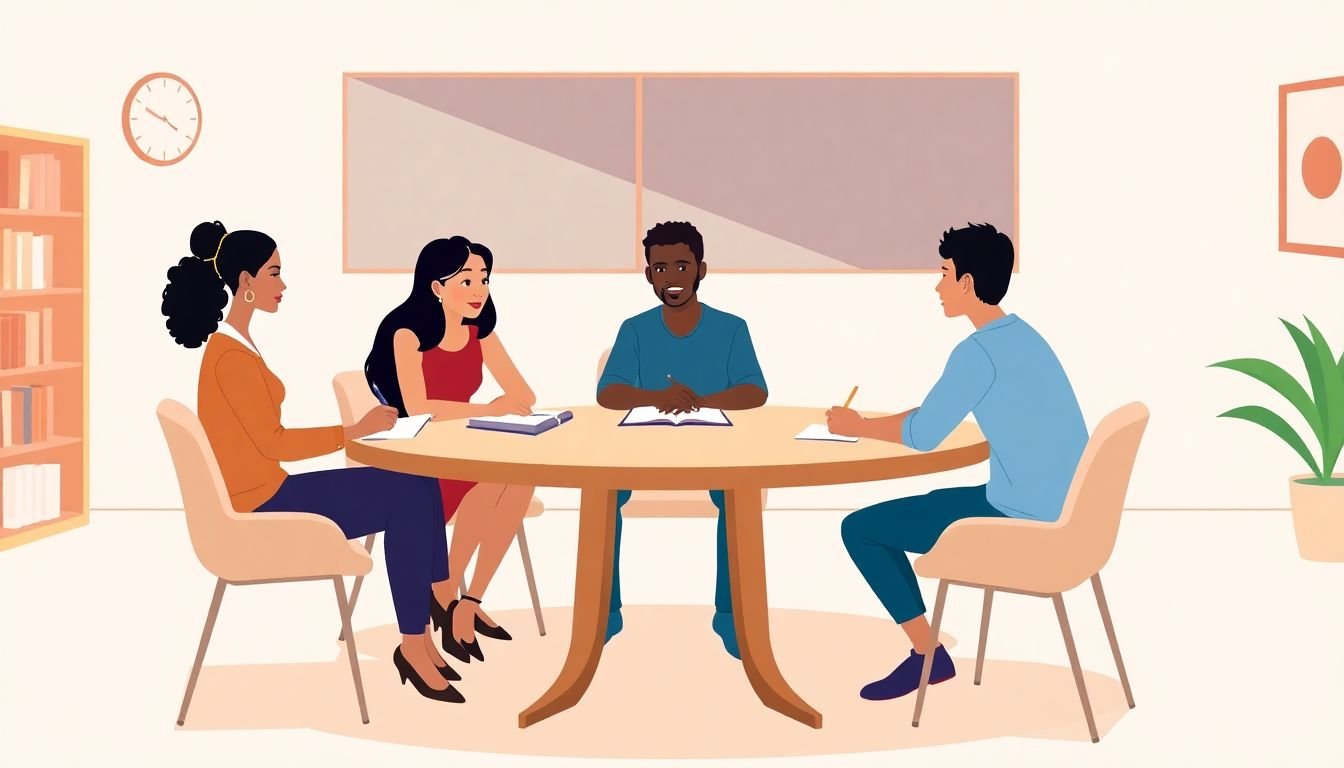
Understand Cultural Differences in Learning Styles
Let me start with a quick reality check: “learning styles” (like visual/auditory/kinesthetic) make for easy conversations, but they’re not a perfect system for planning instruction. In practice, what I see more consistently is that culture shapes how students interpret classroom expectations—when it’s “okay” to ask questions, whether they expect teacher-led instruction or student-led discussion, and how comfortable they feel showing mistakes.
In my experience, the biggest breakthroughs don’t come from labeling students. They come from building lessons that offer multiple entry points and multiple ways to respond—so students aren’t forced into one participation style.
Here’s what that looks like with a concrete example. In one unit I taught (8th grade ELA), I noticed that a few students wouldn’t speak during whole-group discussions even when they clearly understood the text. When I switched to a “think first, share later” routine—silent annotation for 3 minutes, then small-group talk with sentence starters—participation jumped. No one suddenly became “a visual learner.” The environment just matched how they felt safe processing ideas.
So instead of asking, “Which learning style do they have?” I ask: “What support does this student need to show what they know?”
Identify Key Cultural Learning Patterns
If you want to spot cultural learning patterns, don’t rely on vibes. Watch behaviors during specific tasks, then ask students about what helped.
When I’m trying to understand a group, I focus on four things:
- Participation norms: Who speaks up first? Who waits? Do students ask questions directly or indirectly?
- Communication style: Are answers brief and factual, or elaborated? Do students use examples or evidence?
- Comfort with uncertainty: How do students respond when instructions are new or ambiguous?
- Collaboration expectations: Is group work seen as sharing responsibility, or “one person does it”?
Now let’s make it operational. Suppose you’re teaching 9th grade science and you’re doing a lab where students must discuss hypotheses. What should you observe?
- Do students start by reading the directions silently or jumping straight in?
- Do they negotiate roles, or do roles get assigned quickly?
- When someone is confused, do they ask a question, look for a peer, or stop working?
Ethical data collection tip: I keep it simple and low-stakes. I don’t ask students to “identify their culture” or label themselves. Instead, I ask about what supports them. For example:
- “When we start a new topic, what helps you most: a short example, a diagram, a quick discussion, or time to read?”
- “If you’re stuck, what do you usually do first?”
- “Do you prefer working alone, with a partner, or in a group? (You can pick more than one.)”
Then I adapt the lesson. If I see students freezing during open-ended discussion, I add structured prompts: “Agree/Disagree with evidence,” “One idea + one question,” or “Summarize in 1 sentence.” If that doesn’t help, I don’t keep pushing the same format—I switch to a different access point (e.g., a short video with captions, a graphic organizer, or a worked example).
One more important note: some students will seem “visual” or “oral” one week and not the next. That’s normal. Preferences change with the task, language demands, and confidence.
Recognize Regional Variations in Learning Styles
Even when your students share similar backgrounds, they can still bring different experiences with schooling. Regional variations can show up in surprising ways—especially around language, authority, and group norms.
For example, instead of repeating vague claims about percentages, I focus on what you can actually verify in your classroom:
- Language familiarity: Are students used to academic vocabulary and extended writing, or are they more comfortable with everyday language?
- School routine exposure: Do they know how to transition between activities, start independently, or ask for clarification?
- Authority dynamics: Are students comfortable disagreeing with the teacher, or do they wait for approval?
- Group work expectations: Some students come from environments where “group work” means quiet parallel work. Others expect active discussion.
If you teach in a district with both rural and urban feeder schools, I’ve seen a pattern: students who had fewer opportunities for structured discussion sometimes benefit from explicit modeling (“Here’s what a strong question sounds like”). Meanwhile, students from more discussion-heavy backgrounds may need support learning how to work quietly and individually when the task calls for it.
What to do if you’re wrong: This matters. If you assume a student will prefer group work and they don’t, don’t make it a personal issue. Offer choice: “You can do this as a partner or independently—your choice.” Then observe what they pick and what results.

Implement Culturally Responsive Teaching Techniques
Culturally responsive teaching isn’t just about adding diverse books to your classroom library. It’s about designing instruction so students can connect their identities to the work—and so they feel respected while they’re learning.
Here are techniques I actually use (and what I noticed when I did):
- Use mirrors and windows: “Mirrors” are texts that reflect students’ experiences. “Windows” are texts that let students understand others. I aim for a balance, not just one.
- Offer multiple ways to show understanding: One assignment might allow a short video, a written explanation, or a visual infographic with captions.
- Normalize different participation levels: Not every student wants to speak in whole group. I build in partner rehearsal and low-pressure written responses.
- Use culturally neutral language for directions: Avoid phrases that assume a specific background (“As everyone knows…”). Instead, define terms and model examples.
Example (middle school literature): When I teach a unit on theme, I’ll pair a whole-class anchor text with a choice board. Students pick one of three “theme evidence” options: quote + commentary, scene summary + connection, or a mini-poster explaining the theme with symbols. The standard is the same; the path to the standard is different.
And yes—display matters. If your classroom walls only show one kind of family, one kind of hero, or one kind of language, students feel it. Updating visuals doesn’t solve everything, but it sends a message: “You belong here.”
Balance Curriculum Standards with Cultural Relevance
This is the part teachers often worry about: “If I add cultural content, will I still cover the standards?” You can—if you plan backwards.
Here’s my approach:
- Step 1: Start with the standard. Write the measurable target at the top of your plan. Example: “Students will explain how evidence supports a claim.”
- Step 2: Decide what “evidence” could look like. It doesn’t have to be only textbook quotes. It can be interviews, news clips, community stories, or data from a class survey.
- Step 3: Choose culturally relevant contexts. Pick examples that feel familiar to your students’ lives—without forcing anyone to share personal details.
- Step 4: Keep the assessment consistent. The rubric stays the same; the content choices can vary.
Example (math): If the standard is about proportional reasoning, I’ll create word problems that use familiar scenarios—groceries, transportation schedules, phone plans, or sports stats. The math skill is identical. The context is what changes.
The win I see is engagement. Students don’t just “do school.” They recognize the question behind the question.
Integrate Technology with Cultural Sensitivity
Technology can help a lot—or quietly make things harder. It depends on whether you’re using it to expand access.
In my experience, culturally sensitive tech integration usually includes:
- Multimodal options: captions, transcripts, audio + text, and visuals.
- Choice in output: students can submit a written response, a recorded explanation, or a slideshow with narration.
- Language support: translation tools and bilingual resources when appropriate—especially for students learning academic English.
- Community-safe topics: be careful with student-generated content. You don’t want an assignment that pressures students to “perform” their identity.
If you’re working with a diverse linguistic group, I recommend you check tech settings early: Are captions on by default? Can students access the same materials on mobile devices? Is the reading level too high for students who are still building language skills?
One practical idea: use collaborative tools where students can brainstorm using icons, color-coded sticky notes, or guided templates. That way, students who prefer quiet processing still contribute.
Apply Practical Strategies for Understanding Learning Styles
I don’t love the phrase “learning styles inventory” because it can turn into a one-time label. But I do love the idea of collecting preference data and using it to adjust instruction.
Here’s a workflow you can run without overcomplicating your week:
1) Use a quick weekly check-in (3 minutes)
Once a week, ask the same 3 questions so you can spot patterns:
- What helped you most this week? (choose one: examples, discussion, reading, practice problems, visuals, videos)
- What was hardest? (choose one: understanding instructions, vocabulary, staying focused, working with others)
- How do you want to learn next week? (choose one: more practice, more modeling, partner work, independent work, small groups)
Keep it anonymous if possible, and let students skip if they don’t want to answer. You’re aiming for trends, not individual “diagnoses.”
2) Add a rubric-based observation (2 tasks per month)
During two lessons each month, jot quick notes using a simple rubric for participation and comprehension. I use four categories:
- Access: Could the student follow the task directions?
- Engagement: Did they attempt the work (even if imperfect)?
- Communication: Did they share thinking in some form (talk, writing, gesture, or digital response)?
- Support: Did they need scaffolds like sentence starters, vocabulary glosses, or worked examples?
This helps you separate “preference” from “barrier.” Sometimes a student isn’t disengaged—they’re missing language scaffolding or unclear instructions.
3) Adapt instruction with a “try, tweak, confirm” rule
Try one change for one week. For example:
- If students aren’t speaking during discussions, try structured sentence starters + small groups.
- If students struggle with reading, add a short audio summary with captions and a graphic organizer.
- If group work stalls, assign roles (timekeeper, recorder, question asker) and require a 3-sentence group report.
If it doesn’t improve results, don’t keep stacking changes. Pick one variable and adjust again. That’s how you learn what’s actually working.
And a quick honest limitation: “learning styles” theory is often oversimplified. Students don’t learn best in only one mode forever. They learn best with the right support for the task, the language demands, and the classroom culture you’ve built.
Encourage Cultural Exchange in the Classroom
Cultural exchange can be powerful, but only if it’s structured. I’ve seen “share your culture” activities backfire when they turn into pressure or when students feel like they have to represent an entire community.
What works better is student choice and low-pressure formats:
- Story circles with prompts: “Tell a story about a tradition you enjoy,” or “Share a family recipe and explain the meaning behind it.” Students can pass or choose a different prompt.
- Project-based sharing: Create a class museum wall with student-selected artifacts (photos, drawings, short descriptions). No live spotlight required.
- Multicultural days with standards: Connect the day to learning goals. For example, in social studies, students might analyze how migration shaped a community.
- Pen-pal or partner classrooms: Use guided questions and shared artifacts (a short video introduction, a class poster, or a collaborative slide deck).
When students share, I also teach respectful curiosity: “Ask one question that shows you listened.” That simple norm changes the tone fast.
Summarize the Importance of Cultural Awareness in Learning
Cultural awareness matters because it affects more than “engagement.” It affects safety, belonging, and how students interpret feedback.
If a student believes the classroom values only one kind of communication, they’ll hold back. If they think their identity is “off-topic,” they’ll stop trying to connect learning to meaning. And once that happens, assessment results usually look worse—not because the student can’t learn, but because they can’t access the learning environment.
When you build culturally responsive instruction, you reduce bias, increase participation, and create a classroom where students can take academic risks. That’s what helps them thrive.
Take Action to Enhance Student Outcomes Through Cultural Responsiveness
If you want a starting point that doesn’t require a total overhaul, try this 2-week action plan:
- Day 1-2: Pick one unit you’re teaching soon. Identify one standard and one likely barrier (discussion comfort, language load, independent directions, group dynamics).
- Day 3: Add a choice-based response option (e.g., talk, write, digital poster) for one assignment.
- Day 4-5: Run the weekly check-in (3 questions) and review trends.
- End of Week 1: Choose one tweak based on the data. Don’t change everything.
- Week 2: Implement the tweak and compare participation and assessment evidence.
Then—this is key—document what happened. Which students were more engaged? Did the change affect the whole class or only a subset? What feedback did students give?
That’s how cultural responsiveness becomes real practice instead of a concept you agree with.
FAQs
Cultural differences in learning show up in how students interpret classroom expectations, communicate ideas, and participate in learning tasks. It’s less about labeling students as “visual” or “auditory” and more about understanding how culture influences comfort with discussion, authority, independence, and ways of showing understanding.
Because students may have different schooling experiences even within the same language or cultural background. Regional variation can affect familiarity with classroom routines, comfort with authority, and how group work is expected to function—so your instruction may need scaffolds and clear modeling to meet students where they are.
Use culturally relevant examples and texts, offer multiple ways to show understanding, normalize different participation levels, and build structured cultural exchange. The goal is to keep standards consistent while making access and representation better for all students.
Choose tools that support captions, transcripts, and multimodal learning. Use language supports when appropriate, and offer students options for how they respond. Also check that the tech works for different devices and reading levels—so it doesn’t accidentally create a new barrier.