Jewelry Making Course Online (2027): Best Paths
⚡ TL;DR – Key Takeaways
- ✓Choose a jewelry making course online by your skill goal: beading, wire wrapping, stone setting, or wax carving
- ✓Best beginner courses pair HD demos + structured assignments with mentor feedback (not just free tutorials)
- ✓Use supply kits and clear material lists to avoid the “wrong tools” problem
- ✓Look for realistic pacing: self-paced options (up to ~18 months) reduce drop-off
- ✓Compare platforms on what matters: live Q&A, forums, certificates/diplomas, and project depth
- ✓Don’t skip business: Etsy marketing, pricing, packaging, and craft-fair prep make courses complete
- ✓AI can personalize practice prompts and help you iterate faster (if the course uses it well)
Beginner courses for getting started: what actually works
Online jewelry making courses/classes are only “hands-on” if they catch your mistakes. I’ve watched too many beginners learn the right steps in theory and still produce wobbly, loose, or misaligned results at home. The fix isn’t magic—it’s structured demos, a practice routine, and at least one feedback channel.
Here’s the annoying truth: online DIY jewelry is easy to get wrong in the first 2 weeks. Wrong tool sizes, inconsistent tension, unclear pacing, and no feedback loop will quietly drain your motivation.
My go-to checklist before you enroll (tools, pacing, feedback)
Start with structured beginner courses that include step-by-step projects and tool guidance. Online jewelry making courses/classes should tell you what to buy, what substitutions are safe, and how to set up your work surface. If you can’t replicate their material path, you’ll keep chasing “why doesn’t it look like theirs?”
Next, prioritize HD video demos. I don’t mean “good lighting.” I mean angles that show wire placement, stone alignment, solder seams, and finishing steps without you guessing.
Finally, verify you’ll get a repeatable process. You want material lists, photo/angle guidance, and submission expectations that make it clear what “done” looks like.
- Tools — Look for a proper list (sizes matter) plus safety notes for metalworking modules.
- Pacing — Self-paced options that allow up to ~18 months to complete reduce drop-off for real schedules.
- Feedback — Forums, live Q&A, or mentor reviews beat “watch and hope” almost every time.
- Deliverables — You should finish multiple wearable projects, not just watch techniques.
Free vs paid: why mentorship beats “watch and hope”
Free online jewelry making courses/classes are great for first contact. YouTube and general tutorials can absolutely teach fundamentals like basics of beading patterns or simple jump rings. But they rarely catch your errors early—especially the kind that show up after your third attempt.
Paid programs scale better because mentoring adds speed. Whether it’s a forum thread, review cycles, or live Q&A, you get a way to correct technique mid-course instead of mid-month.
I used to tell myself, “I’ll figure it out.” Then I realized the pattern: I was repeating the same mistake with different beads. Once I had feedback on what I was doing wrong, my progress stopped being random.
If you’re choosing between free and paid, the question isn’t “can you learn free?” You can. The question is “do you get consistent results without waiting weeks for a fix?” That’s what mentorship solves.
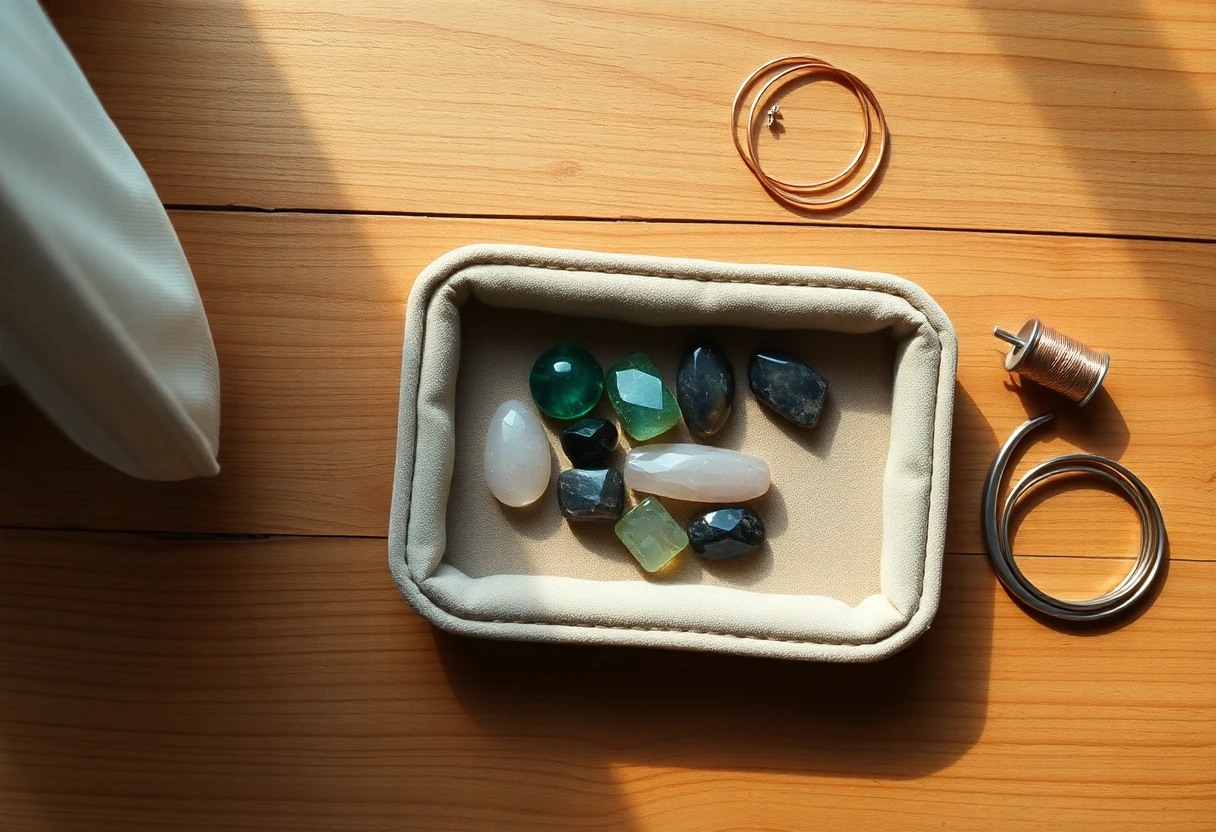
Jewelry making for beginners: pick your first technique
Your first technique determines whether you stick with it. If you start with something too technical (or too tool-heavy) you’ll bounce. If you start with forgiving skills, you’ll build confidence, finish projects, and keep momentum long enough to level up.
So pick something that gets you a wearable output quickly. From there, you can move into soldering, stone setting, and more advanced metalwork with real hands-on discipline.
Beading and wire: the fastest confidence builder
Wire wrapping and beading are beginner-friendly because they’re forgiving. You don’t need a full workshop setup to practice. You can often make a clean clasp, repeat a jump-ring method, and refine tension without burning time on complex tools.
What should you look for in a course? Clean finishes, consistent tension, and repeatable clasp/jump-ring methods. Those are the difference-makers between “cute necklace” and “finished piece.”
- Consistency — You should be able to recreate the same closure and jump-ring rhythm across projects.
- Finish quality — Look for instructions on trimming, rounding ends, and hiding wire tails.
- Repeatable steps — If they don’t show a workflow you can redo, you’ll struggle to progress.
In practice, beading and wire give you fast feedback. You’ll notice right away when tension is off or when the clasp doesn’t sit right—then you can correct immediately.
Soldering, stamping, and chain making: when you level up
Move to chain making and soldering only when the course gives safe tool guidance. This is where people get hurt—or at least create expensive failures. A step-by-step workflow matters: prep, assembly, solder placement strategy, inspection, and cleanup.
Stamping and metal-forming are great intermediate “surface + texture” lessons. They teach finishing discipline too—polishing, checking edges, and getting consistent results without needing advanced stonework.
When a course is solid, you’ll get a clear progression. You won’t feel like you’re jumping from “wire jewelry” to “studio metalwork” overnight.
- Stamping — Look for finishing steps so texture doesn’t look raw.
- Chain making — You need link closure consistency and inspection points.
- Safety — A real list of protective gear and ventilation expectations.
Skillshare jewelry design series: pros, cons, and fit
Skillshare is a great mood board with instructions, but you need to be honest about feedback. I’ve used Skillshare to sample styles and get unstuck on a specific technique. But when beginners try to “learn the whole craft” there, they often stall.
Where Skillshare shines (short projects, inspiration, DIY pace)
Skillshare is popular for online jewelry making courses/classes because they’re easy to sample. You can try a technique, build a mini project, and quickly figure out what you enjoy. For beginners, that matters more than people admit.
The best use case is building momentum. Take one class, do the project with the supplies provided, and document what you liked and what felt unclear. That becomes your “what to buy next” list.
Also, Skillshare tends to fit real schedules. Short lessons help you get practice done between life obligations. When you need a break, you can pause without losing the thread.
- Short projects — Good for quick wins and learning fast.
- Beginner-friendly — Often lighter on prerequisites.
- Inspiration — You’ll discover design directions fast.
Where it falls short (feedback and depth)
Where it falls apart is iteration. Many Skillshare classes don’t have ongoing mentor feedback or iterative project improvement. You may finish a piece, but not know whether your technique is “correct enough” until you compare it to a higher standard.
If you choose Skillshare, complement it. That means community critique (forums, groups, or a separate course with reviews) or a structured program that provides repeatable workflows.
Skillshare got me started. But when I wanted cleaner wraps and tighter alignment, I needed feedback loops. Without them, my progress slowed right when I finally felt excited.
Udemy's top-rated jewelry courses: structured learning options
Udemy can be really strong for structured technique mastery—if you evaluate carefully. It’s not automatically better than Skillshare or subscriptions. It’s better when the course is genuinely end-to-end, with clear project deliverables and a sequence you can follow.
How to evaluate Udemy courses for beginners
Confirm the course includes a complete plan. Supplies, practice steps, and end-to-end project completion should be obvious from the syllabus and reviews. If it feels like a set of disconnected lessons, you’ll struggle to build repeatable results.
Also check whether the course provides certificates/diplomas or at least proof-of-completion. If you care about a structured learning roadmap for your portfolio, documentation helps.
- Syllabus quality — Look for step-by-step progression and clear outcomes.
- Supplies clarity — It should tell you exactly what to buy and why.
- Completion proof — Certificates/diplomas can help your credibility trail.
Best use case: step-by-step technique mastery
Udemy tends to be strong for technical learning when you follow the sequence and redo exercises. That’s the part people skip. Watching once isn’t enough—jewelry quality comes from repeating the mechanics until they become stable.
If you want a fast path to “I can make a clean version of this,” Udemy can deliver. The real win is your discipline: do exercises, redo weak spots, and don’t move ahead until your finish quality is matching the demo.
- Redo exercises — If the course includes drills (clasp practice, wrap repetition), actually do them.
- Match finish standards — Clean ends, aligned stones, proper trimming.
- Document iterations — Photos help you see improvement and recurring issues.
Domestika's jewelry making workshops: artisan techniques at home
Domestika is often where you go when you want artisan techniques, not just basic instructions. It blends jewelry with adjacent crafts—ceramics, wood, resin, embroidery—so you can build pieces with a broader handmade feel.
What to expect from Domestika (and who it’s best for)
Domestika often blends jewelry with adjacent crafts. That’s great for DIY/handmade creators who want variety and a studio-ish process at home. You’re not just learning a technique—you’re learning how an artist thinks about materials and finishing.
Choose Domestika when you want style-led workshops plus clear demonstrations from established instructors. The “best for” category is basically: if you care about aesthetic direction and mixed-media outcomes, you’ll feel at home.
There’s also a real selection advantage. Domestika recommends 10 online courses for DIY jewelry design in 2025, including ceramics, wood, embroidery, and resin-focused work.
- Design-led learning — More inspiration, less “mechanics only.”
- Clear demos — Established instructors teach process, not vibes.
- Hybrid materials — Resin, ceramics, embroidery hybrids show up often.
Techniques worth searching: resin, ceramics, embroidery hybrids
If you like mixed-media jewelry, Domestika can broaden your design palette. That matters if you’re trying to create a recognizable “you” style that isn’t only wire wrapping.
When you pick a course, look for finishing steps. A piece can look great during assembly but still feel unfinished if you don’t learn surface work, edges, sealing, and final presentation.
For many creators, Domestika is the step where “I’m making jewelry” becomes “I’m building a body of work.”
Creative Live, CourseHorse, and live Zoom classes: the feedback advantage
Live Zoom classes change the game because feedback arrives while you’re still in the work. I don’t mean occasional Q&A. I mean you can correct technique mid-flight—especially for metalwork steps like stone setting and chain making.
Platforms like CourseHorse commonly run live Zoom forging/soldering demos with forums and post-class materials lists. That structure is what reduces beginner confusion.
Live Zoom forging/soldering demos: learning with Q&A
Live sessions reduce the biggest online risk. You learn how to correct technique while it still matters. If a placement or prep step is off, you don’t just discover it after you’ve ruined materials.
CourseHorse-style formats often include forums and post-class materials lists. That helps you build a consistent practice plan after the live session ends.
- Q&A — Ask during the exact step you’re doing.
- Post-class lists — Materials lists remove guesswork.
- HD reference — You can compare your work to the demo angles.
In practice, this is where “hands-on” becomes real. The workshop vibe comes from correction timing, not just camera quality.
My lesson learned: record yourself and compare finishes
Your finish quality is everything. For wire wrapping, soldering, and stone-setting-like steps, the smallest alignment and trimming issues show up fast. Video journaling helps you spot issues that you can’t feel with your fingers alone.
Use the course’s HD angles as reference frames. Rewatch the specific segment where they show inspection and rework—then compare your own sequence from the same perspective.
I started recording my wraps because I thought I’d remember what went wrong. I didn’t. Seeing the angle and timing on video made the fix obvious—so I stopped guessing and started correcting.
Live classes plus your own comparison loop is the fastest path to consistent results.
Jewellers Academy: course paths by type and level
If you hate course rabbit holes, choose a catalog that organizes by type and level. I’ve used Jewellers Academy-style catalogs because they reduce the temptation to jump ahead. You can map skills to projects without breaking your foundations.
How to choose the right track (beginners to advanced)
Choose the track that matches your outcome, not just your curiosity. Jewellers Academy courses are organized by type and level, from beginners to advanced. That makes it easier to build a coherent learning path instead of collecting one-off lessons.
I care about skill-to-project mapping. If a course starts with a technique but never helps you finish a usable ring or pendant, it’s usually not a strong path for beginners.
- Catalog clarity — Type and level grouping so you don’t jump ahead.
- Skill progression — Sequence from mechanics to final outputs.
- Real projects — You should finish something you can wear or sell.
What to check for: project outputs and skill progression
A strong jewelry making class should produce tangible outcomes. You want finished ring, pendant, or a fully completed set—not just a “learn the concept” lesson.
Also ensure materials and safety guidance are included for any metalworking modules. This is especially important once you move into soldering, chain making, or stone setting.
When the course is designed well, you can feel your skills stacking instead of restarting every week.
Intermediate chain making, stone setting, and wax carving (2027)
Intermediate jewelry making is where online courses either earn your trust or waste your money. The bar is higher because details matter: control, measurement, finishing, and repeatable inspection points. If you want hands-on, step-by-step work here, you need a course that respects the workflow.
In 2027 (and honestly now), learners are also expecting better tooling guidance and more structured progression toward professional output.
Stone setting + wax carving: control, measurement, and finishing
For wax carving, insist on step-by-step workflow. You should see carving stages, refining steps, and clear “readiness” checks before moving to the next stage. If a course jumps around, your wax model won’t get the control you need.
For stone setting, select courses that explain fit and pressure goals. Better courses show how to check alignment before final securing—because once you secure incorrectly, rework gets expensive.
- Measurement discipline — Templates, alignment checks, and consistent proportions.
- Finishing steps — Surface cleanup and final readiness checks.
- Rework guidance — What to do when the fit isn’t right.
Chain making + soldering: avoiding weak links
Chain making needs consistency in link closure. Look for demos that teach reliable techniques and inspection points. If you can’t check closure quality, your chain will fail unpredictably.
Soldering courses should include prep, flux behavior, temperature/safety notes, and post-solder cleanup expectations. The cleanup part matters more than beginners think—untidy seams reduce professional quality fast.
- Inspection points — Check link closure before soldering/finishing.
- Flux + temperature — Clear behavior guidance reduces mistakes.
- Cleanup expectations — Polishing, seam cleanup, and final finish criteria.
Comparison of top platforms: best for beginners, DIY, and business
Don’t pick a platform by brand popularity. Pick it by what you need right now: feedback, structure, pacing, and deliverables. That’s where Skillshare, Udemy, and live-leaning platforms typically separate.
| Feature | Skillshare | Udemy | Live (CourseHorse / Zoom) | Domestika | Jewellers Academy |
|---|---|---|---|---|---|
| Best for | Style sampling, quick starts | Structured technique mastery | Real-time feedback | Artisan/mixed-media workshops | Path clarity by type/level |
| Feedback | Limited mentor review | Sometimes certificate/proof, usually self-driven | Live Q&A + forums/materials | Instructor demos (feedback varies by course) | Varies by program, often review-oriented |
| Pacing | Watchable in small sessions | Follow the sequence; redo drills | Synchronous + post-class practice | Studio workflow style | Catalog-based progression |
| Project depth | Often shorter mini projects | Can be end-to-end if well-designed | Deep on technique steps | Strong on final aesthetics | Strong on outputs and progression |
| Business module | Usually not central | Depends on course | Some programs add action steps | More art-led than business-led | Varies; check for Etsy/craft-fair guidance |
Skill-by-skill matrix: wire wrapping vs beading vs goldsmithing
Match your learning path to the technique. Wire wrapping and beading usually give the fastest confidence builder for beginners. Soldering/goldsmithing comes later when you’ve developed consistent tension, trimming discipline, and finishing habits.
Use platform catalogs (and course syllabi) to confirm technique coverage like stamping, chain making, and finishing. This prevents you from “buying a course” that’s actually missing the technique you want.
- Wire wrapping — Look for consistent tension, clean finishes, repeatable clasp/jump-ring methods.
- Beading — Prioritize pattern execution and finishing consistency (ends, spacing, secure knots).
- Soldering — Require prep, flux behavior, temperature safety, and post-solder cleanup guidance.
- Wax carving — Insist on carving stages + refining workflow + next-step readiness checks.
- Stone setting — Fit/pressure goals + alignment inspection before final securing.
Certificates, diplomas, and completion proof: what’s worth it
Not all courses offer certificates or diplomas. Check expectations early if you want documented progress. I see a lot of beginners assume “completion proof” is automatic—it’s not.
If you want credibility for Etsy or portfolio sites, prioritize courses with clear project deliverables and review records. Your portfolio needs finished proof, not just course access.
- Worth it — If it matches a clear deliverable and review trail.
- Not worth it — If it’s just a checkbox with no finished piece.
10 free online jewellery making tutorials: where to start safely
Yes, you can start free—but only if you keep it safe and focused. Free tutorials are useful for fundamentals. They’re not great for correcting repeated mistakes, especially once you’re dealing with metalworking steps.
Pick a small practice loop so you don’t drift. 30–45 minutes focused repetition beats 2 hours of scattered watching.
Curated beginner practice ideas (free online, minimal gear)
Build a short practice routine you can finish. Start with one technique per week. Then compare your result to the HD demo so you can see what’s off.
- Basic jump ring opening/closing and alignment practice
- Simple clasp options: lobster clasp positioning and closure checks
- Wire wrap fundamentals: trim + bend + repeat wrap count
- Beading basics: consistent spacing and secure ends
- Practice pieces: make 2–3 identical units to test consistency
What to avoid in free tutorials (common beginner traps)
Avoid skipping tool fit and safety fundamentals. Online jewelry making without guidance can damage materials and produce inconsistent results. If a tutorial doesn’t explain why a specific tool size matters, treat it as “for inspiration,” not your main instruction.
Don’t jump straight into stone setting or soldering unless the tutorial clearly teaches prep + cleanup + inspection. Beginners often miss inspection steps and assume the result is correct because it “looks close.”
If you want a safer free path, stay in wire wrapping, beading, and basic closures until you can consistently replicate results across attempts.
Can I learn jewelry making for free online? (and when to upgrade)
You can learn jewelry making for free online—up to a point. Fundamentals like beading and basic wire wrapping can be self-taught with YouTube and free tutorials. But when you need consistent results fast, mentorship becomes the difference between progress and frustration.
A realistic path: free learning → structured course → mentor feedback
Free online jewelry making starts great with fundamentals. You can get “enough knowledge” to begin building. But the moment your pieces don’t match the demo, you need correction.
Structured courses with mentoring help you iterate properly. Many structured programs also include risk-free trials (commonly 14-day refunds in structured online jewelry programs) and self-paced completion windows up to ~18 months. That’s not fluff—it’s what keeps you from bailing when life gets busy.
- Stage 1 — Free tutorials to build basic understanding and vocabulary.
- Stage 2 — Structured beginner course with HD demos + materials list + practice steps.
- Stage 3 — Mentor feedback (forums, Q&A, reviews) to fix recurring errors.
I tell people this bluntly: free is fine for learning what the steps are. Paid is what helps you learn what “good” looks like.
My upgrade triggers: when you’re stuck after 3 projects
Upgrade if you can’t consistently replicate your results across multiple attempts. A common failure pattern is: project 1 is “okay,” project 2 improves, then project 3 regresses or stays inconsistent. That’s the point where feedback saves you time.
Choose a course with forums, one-on-one mentor feedback, or live Zoom sessions. If you don’t have that loop, you’ll keep working harder instead of working smarter.
Fast start your jewellery business: Etsy, pricing, packaging, and portfolio
Most jewelry making courses stop at “making.” If you want to sell, you need an extra module: Etsy, pricing, packaging, and photography basics. I learned this the hard way—my pieces were good, but my listings were weak.
From DIY/handmade to sellable work (the missing course module)
Many beginner courses focus on making; top programs add business skills. That includes Etsy marketing and craft fair sales prep. You also need to learn how to photograph, package, and describe items so your work doesn’t feel invisible online.
Here’s the real-world workflow: finish a piece, photograph it consistently, write a description that explains materials and measurements, then package it in a way that protects it and looks intentional. If you don’t plan that, you end up with a box of “almost ready to sell” items.
- Etsy basics — Titles, tags, and listing structure that matches how buyers search.
- Pricing — Calculate time + materials + overhead. Then price for margin, not hope.
- Packaging — Build a repeatable shipping and presentation system.
- Craft fair prep — Display strategy, quick-selling inventory planning, and backups.
A credible portfolio beats a pile of half-finished pieces
A credible portfolio is finished work with a story of improvement. That means prioritize courses/classes that deliver complete project outputs. Then document what you changed after feedback—what improved, what you corrected, and what you’re repeating better.
If you’re serious about business, portfolio quality matters more than raw quantity. One excellent finished set photographed consistently beats five half-finished pieces with random lighting.
When my listings finally matched my actual finish quality, sales stopped feeling like luck. The business piece didn’t replace the craft—it made the craft sell.
Wrapping Up: choose your best jewelry making course online (2027)
Choose the course that matches your technique and your feedback needs. If you want progress without burnout, pick your first technique and confirm the program is truly step-by-step. Then lock in HD demos plus a feedback loop and realistic pacing.
My final decision framework (quick and practical)
Pick your first technique and follow the mechanics first. Beading and wire wrapping first. Wax carving, soldering, and stone setting later. That ordering helps you build hands-on discipline instead of jumping straight into complex workflows.
Then choose programs with HD demos + a feedback loop. Forums, Q&A, and review submissions matter because they shorten the time between “wrong” and “correct.” Real progression is repeatable, not inspirational.
- Step-by-step — You should see workflow stages, not just overview lessons.
- Feedback loop — Forums, reviews, or live Q&A are your safety rail.
- Pacing — Self-paced options with enough time reduce drop-off.
- Outputs — Finished pieces you can wear, share, or sell.
Where AiCoursify fits: mapping your learning path
I built AiCoursify because I got tired of course hunting. I watched people waste time comparing random classes without building a coherent sequence from beginner to intermediate to portfolio and business. AiCoursify helps you map a personalized learning path and keep you on track with the next safest step.
Do you want to optimize time? Then you need a plan. And in jewelry making, the “right next step” is usually the difference between staying motivated and stalling.
Frequently Asked Questions
Can I learn jewelry making for free online?
Yes for fundamentals like beading, basic wire wrapping, and simple closures—especially if you use YouTube and free tutorials. But for consistent results and faster correction, paid jewelry making courses online with mentoring are usually the next best step.
What are the best platforms for beginner jewelry courses (Skillshare vs. Udemy)?
Skillshare is often best for trying styles and learning faster conceptually. Udemy is often better for structured step-by-step technique mastery—choose based on whether you want guided sequence or inspiration first.
Do online courses offer certificates or diplomas?
Some do, but it varies. Courses may offer certificates/diplomas or completion proof, while others focus purely on access to the content. If credentials matter for your career or portfolio, check the syllabus and completion requirements before enrolling.
What techniques are covered (wire wrapping, soldering, stone setting)?
Beginner tracks usually cover beading and wire wrapping. More advanced tracks cover soldering, chain making, wax carving, and stone setting. Always confirm the course includes finishing and inspection steps—not just “how to start.”
Are subscription models (like Skillshare) enough to finish a project?
They can be if the class is structured and you follow a practice plan. For many learners, a mentor-led jewelry making course online with review loops helps you finish with confidence and consistent quality.
Which course is best if I want jewelry to sell on Etsy?
Choose programs with business skills like Etsy marketing, pricing, packaging, and photography basics. Look for deliverables (complete pieces) plus feedback—your portfolio quality directly impacts sales.