Implementing Tiered Pricing Strategies in 6 Simple Steps
Pricing is one of those things that sounds simple until you actually have to do it. You want to make it easy for customers to say “yes,” but you also don’t want to undercharge and regret it later. And if you only offer one price, you’re basically betting that everyone values your product the exact same way. They don’t.
In my experience, tiered pricing is the easiest way to give people options without turning your checkout page into a confusing mess. I’m going to walk you through a practical, step-by-step approach to setting up tiered pricing strategies—then testing and tweaking them until they perform.
Along the way, I’ll share what I’ve seen work (and what didn’t) when companies try to move from “one plan for everyone” to “a plan for every kind of buyer.”
Key Takeaways
- Use 3-5 tiers most of the time. It’s enough choice to match different needs, without overwhelming people.
- Make your lowest tier genuinely useful (not “trial bait”). Budget-friendly should still feel like a real product.
- Design your mid-tier to be the “default” purchase—best balance of price and value.
- Keep the top tier distinct with premium outcomes (more access, faster support, deeper features, etc.).
- Base tier differences on customer research: what they value, what they ignore, and what stops them from upgrading.
- Make upgrades feel natural. Customers should instantly understand what changes when they move up a tier.
1. Maximize Revenue with Tiered Pricing Strategies
Tiered pricing isn’t just “pick a few numbers.” If you want more revenue, you need the tiers to map to real differences in value—and guide people toward the plan that makes the most sense for them.
In my own work, I usually start with 3 tiers and only add more when there’s a clear reason. Too many options can absolutely hurt conversions. I’ve seen pricing pages where 6-7 plans looked “more flexible,” but customers froze because they couldn’t tell what mattered.
Here’s a simple 3-tier example you can copy and adjust:
Example tier structure (monthly):
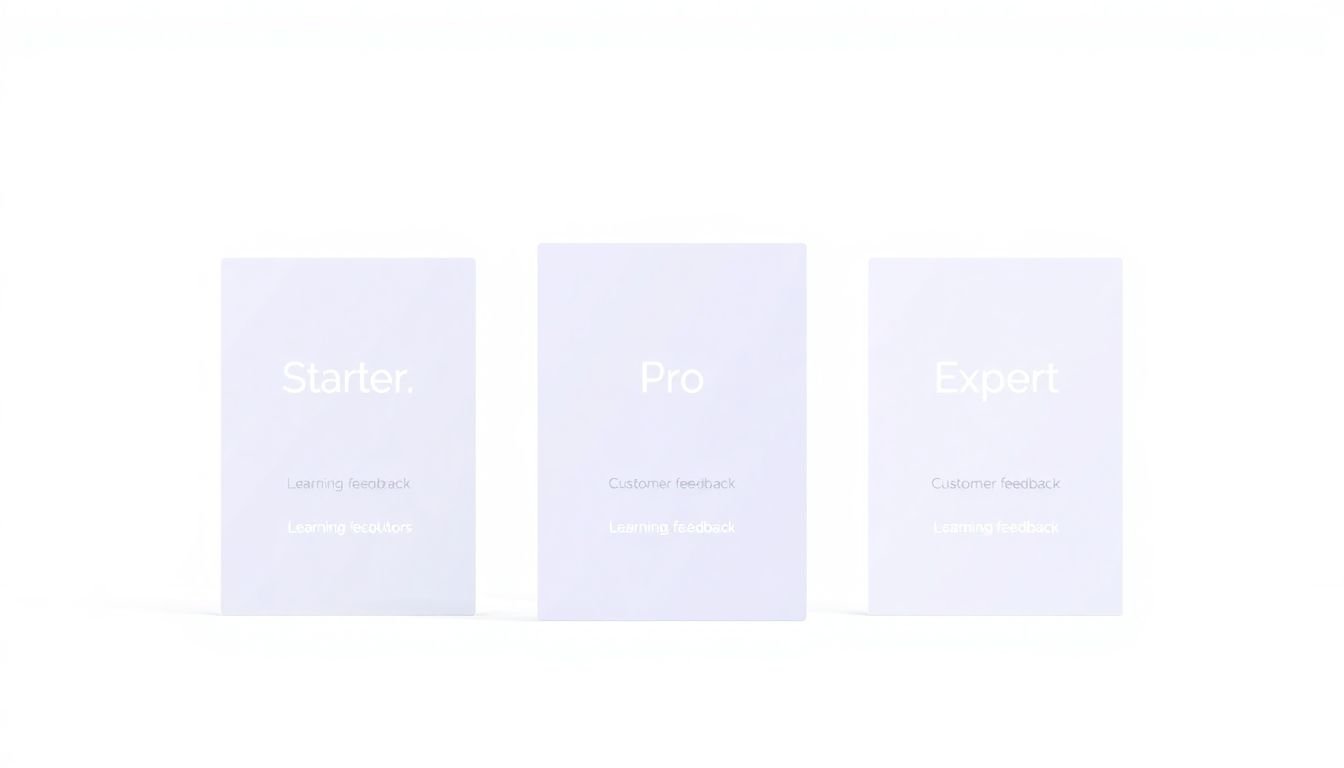
- Starter ($19/mo): access to core content, standard support (48-72 hours), basic templates/resources, 1 user seat
- Pro ($49/mo): everything in Starter, advanced modules, interactive tools (quizzes, calculators), priority support (24-48 hours), up to 5 seats
- Expert ($99/mo): everything in Pro, live sessions (monthly), personalized review/mentorship (limited slots), dedicated onboarding, up to 20 seats
Notice the pattern? The middle tier isn’t just “more expensive.” It’s the best balance of “I get enough value right away” plus “I can see the next step.” That’s where most upgrades happen.
Also, don’t ignore the psychological role of the lowest tier. Your lowest tier should reduce risk for budget-conscious buyers. If it feels like a punishment (limited content, broken experience), people won’t upgrade—they’ll just bounce.
And yes, the top tier can be smaller in volume, but it should be built for buyers who want outcomes fast (or want the full experience). Think personalized coaching, deeper analytics, or faster support. Those customers don’t mind paying more—they mind having to do extra work.
If you’re wondering “How do I know which tier should be the best one?” Here’s what I watch: the plan selection rate (which tier people click first) and the upgrade rate from each tier after 14–30 days. The tier that becomes the default purchase is usually your mid-tier.
2. Understand Your Customers and Market
You can’t build tiered pricing in a vacuum. Customers don’t wake up wanting “plan A vs plan B.” They want an outcome—and they’re willing to pay based on how confident they feel they’ll get it.
So I start with a boring but effective combo: quick customer interviews + lightweight surveys. I’m looking for three things:
- What they value (features, time saved, confidence, results, support)
- What they ignore (things you think matter but don’t move the needle)
- What blocks them from buying (price, uncertainty, complexity, lack of guidance)
Then I map those answers into buyer personas. Not “demographics for fun,” but practical segments like: “beginners who need structure,” “intermediate users who want speed,” and “advanced users who want hands-on help.” Once you see those segments, tier differences become obvious.
Quick example (online course):
In one project I worked on, we had a course with pre-recorded lessons as the main product. We assumed everyone wanted the same thing. Interviews proved otherwise:
- Beginners said, “I don’t know what to do next.” They needed guided pacing and templates.
- Intermediate learners said, “I can learn, but I want feedback.” They cared about quizzes + review.
- Advanced learners said, “I want accountability.” They asked for live Q&A and personalized review.
That’s how we justified three tiers without making the page feel arbitrary. The tiers reflected different levels of support and learning structure, not random feature swaps.
3. Design Effective Tiered Pricing Structures
Alright, now you know your customers. Next step: make the tiers easy to understand at a glance. People don’t read every bullet—they scan.
Here’s what works:
- Differentiate by outcomes and effort, not just “we added a feature.” If the feature reduces time or increases confidence, say that.
- Use explicit lists. Vague descriptions (“more value included!”) kill trust.
- Design clear upgrade paths. Upgrades should feel like a continuation, not a whole new product.
Also, pick a tier “shape.” Most brands do one of these:
- Feature ladder: each tier adds features (good for SaaS and content libraries)
- Support ladder: each tier adds guidance/support (great for courses and services)
- Access ladder: each tier expands access (seats, usage limits, live sessions)
If you offer an online course, a tiered structure could look like this:
- Starter: pre-recorded lessons, downloads/templates, self-paced quizzes
- Pro: everything in Starter + interactive assignments + progress tracking + office hours
- Expert: everything in Pro + monthly live Q&A + personalized feedback (limited slots) + priority support
One practical tip I learned the hard way: don’t make the mid-tier “almost the same” as the low tier. If the difference is tiny, people won’t upgrade. But if the difference is too big, the low tier becomes irrelevant. The mid-tier should feel like the best deal for the most common customer segment.
4. Implement and Test Your Pricing Strategy
Now it’s time to put it live. But don’t just launch and hope. Testing is where tiered pricing becomes “strategy” instead of “guessing.”
For subscriptions, I usually rely on payment/subscription platforms like Stripe or Chargebee. They handle upgrades, proration, and billing logic so you can focus on the customer experience.
Here’s how I test tiered pricing without risking everything:
- Roll out to a limited audience first (one segment, one region, or a subset of traffic)
- Run A/B tests on one variable at a time (price, tier naming, feature emphasis, or the “recommended” tier)
- Track behavior, not just purchases
What should you measure?
- Conversion rate (visits to checkout/purchase)
- Plan mix (how many people choose Starter vs Pro vs Expert)
- Upgrade rate after 14–30 days
- ARPU (average revenue per user/customer)
- Churn by tier (this one matters more than people think)
Target ranges vary by industry, but here’s a realistic benchmark mindset: if your mid-tier is truly the best value, you should see a steady share of purchases there, and upgrades should be higher than from the lowest tier. If the lowest tier gets lots of signups but churn spikes within the first month, your “Starter” might be too thin or not delivering enough early value.
Example test idea (course platform):
Test whether your Pro tier should emphasize interactive quizzes or personalized feedback. In one case, we saw quiz-heavy messaging lift Pro conversions by ~12%, but feedback-heavy messaging improved upgrade rate from Pro to Expert because it set expectations about what Expert includes.
5. Optimize Tiered Pricing Over Time
Pricing isn’t “set it and forget it.” Customers learn. Competitors change. Your product evolves. So you should revisit your tiered pricing regularly.
I recommend reviewing performance every 3 to 6 months. If you’re in a fast-moving market, you might check sooner. The goal is to spot patterns early, not react once revenue drops.
What I look for during optimization:
- Changes in tier selection (are more people buying Starter now?)
- Upgrade friction (are people stuck in Starter/Pro?)
- Churn by tier (which plan is failing to deliver?)
- Support tickets (are you under-delivering at a certain level?)
Let’s say you notice more signups for your Expert tier after you add personalized mentorship. That’s a strong signal. Maybe your Expert tier should include a clearer “how it works” section, or maybe you should add more capacity (more live slots) if it’s profitable.
And if one tier underperforms consistently, don’t just lower the price automatically. Sometimes the issue is:
- The tier name doesn’t match what’s inside
- The upgrade path isn’t obvious
- The tier is missing a “must-have” for that segment
- The price difference between tiers is too small or too large
Small adjustments add up. The best pricing changes are usually the ones that improve clarity and value alignment—not random discounting.
6. Follow Best Practices for Successful Implementation
Successful tiered pricing comes down to three things: transparency, clarity, and simplicity.
- Be transparent: say exactly what’s included and what isn’t.
- Keep it scannable: use short bullet points and avoid long paragraphs in the pricing section.
- Avoid surprise fees: sneaky upcharges or unclear limits make churn more likely.
For course businesses, I’m a big fan of straightforward tier names like Starter, Pro, and Expert. Clever names can feel fun, but they also force customers to do extra mental work. Why make them guess?
Also, make upgrades feel proportional to the added value. If Expert costs 2x Pro but only adds one small feature, customers will feel misled. On the other hand, if Expert includes meaningful outcomes (live sessions, personalized feedback, onboarding), customers usually understand the jump.
If you want more ideas, check out how to price your online course effectively or review this guide on e-learning pricing models.
FAQs
A tiered pricing strategy gives customers multiple options at different price points, usually based on features, service level, or access. The point is to match different needs, encourage upgrades to higher tiers, and capture more customers across different willingness-to-pay levels.
Start with your customer segments. If you’ve only got two clear groups (for example: “budget” vs “needs guidance”), 2 tiers can work great. If you have three distinct needs (self-serve, guided, and hands-on), 3 tiers is usually the sweet spot. Many businesses go with 3 or 4 tiers because it’s enough choice without creating decision fatigue.
Most teams review pricing every 6 months, and sometimes closer to 3 months if they’re testing aggressively or the market changes fast. At minimum, check at least once or twice a year so you’re not stuck with outdated tier value.
Run a controlled pilot. That can mean a limited audience rollout or an A/B test where one group sees the old pricing and another sees the new tiers. Track conversions, plan selection, and early churn—then refine based on real buyer behavior, not assumptions.