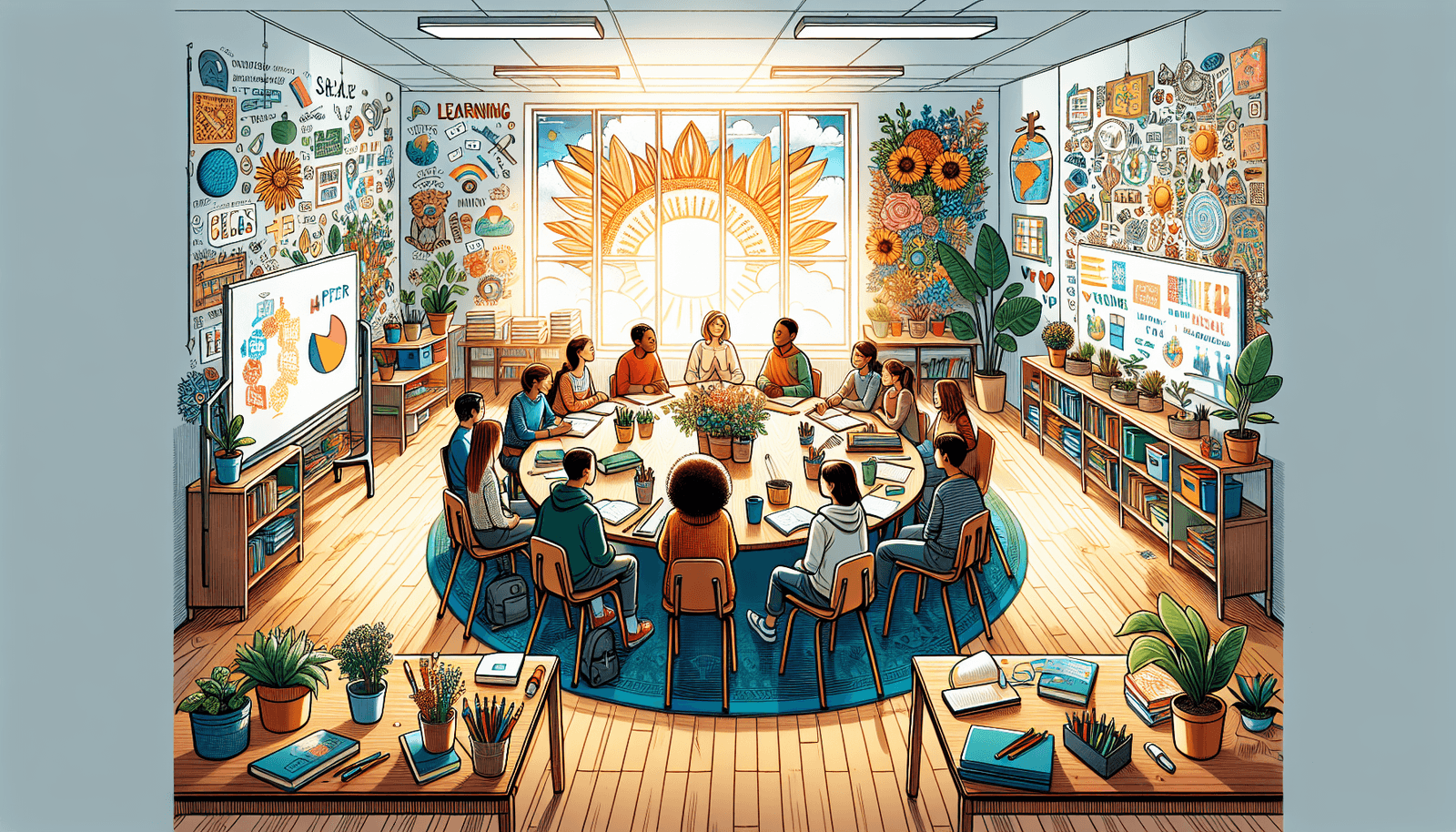
How to Create a Supportive Learning Environment in 10 Steps
Building a supportive learning environment sounds great, but in real life it can feel… messy. You’ve got curriculum to cover, behaviors to manage, and students who walk in carrying everything from “I’m excited!” to “I’m not okay today.” That’s why I like to think about support as something you build on purpose—day by day—not something you hope happens automatically.
In my experience teaching (I’ve taught middle school and worked with high school classes as well), the biggest difference isn’t having the “perfect” classroom. It’s having a few consistent routines and habits that make students feel safe enough to try. For context: in a 7th-grade classroom with about 28 students (and usually a handful of IEPs/504 plans), I noticed the same pattern every year—when relationships and expectations are clear, behavior improves without me having to raise my voice all day.
So, what does “supportive” actually look like? It means students know they’ll be heard, they can make mistakes without getting crushed, and the classroom feels accessible—emotionally and academically. If you’re trying to create that kind of environment, here are 10 steps I’ve used and refined, with practical scripts, quick activities, and ways to measure whether it’s working.
Key Takeaways
Stefan’s Audio Takeaway
- Start with relationships: learn names fast, greet students consistently, and follow through on what you say you’ll do.
- Build community on purpose: use structured group roles and occasional peer mentoring.
- Create psychological safety: a calm layout, visible expectations, and accessible materials reduce anxiety.
- Use a communication protocol: teach how to ask for help, disagree respectfully, and get back on track.
- Co-create rules: involve students in a short rule contract and practice it like a routine.
- Reinforce the behavior you want: specific praise + quick, consistent reinforcement beats vague rewards.
- Run discussions with structure: “no wrong answers” works best with sentence stems and routines.
- Embed SEL into instruction: short role-plays and check-ins help students regulate and connect.
- Design for access: multiple formats (visual, audio, translated) and flexible supports.
- Close the feedback loop: student input + transparent goals = continuous improvement.
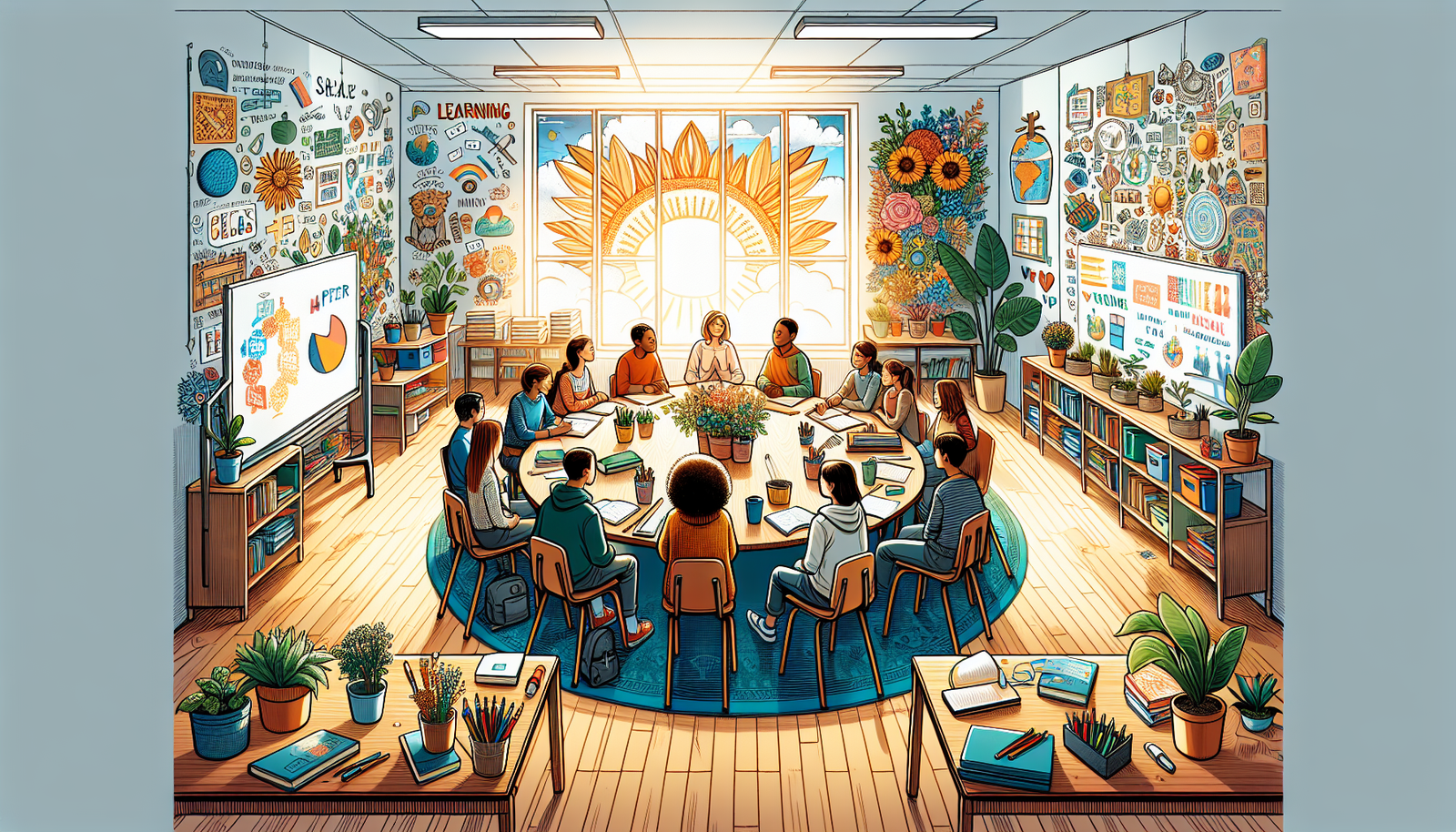
How to Create a Supportive Learning Environment
A supportive learning environment is what helps students take academic risks—ask questions, try strategies, and recover when they stumble. It’s not just “being nice.” It’s building trust, making expectations clear, and ensuring every student feels valued and included.
When students feel safe and supported, I’ve seen them participate more, argue less (because they know how to disagree respectfully), and bounce back faster after mistakes. The goal is simple: reduce fear, increase effort.
Step 1: Build Trusting and Positive Relationships
Let’s start with the foundation: relationships. In my experience, students don’t need constant attention—they need consistent care. Approachable doesn’t mean permissive. It means they know you’re on their side and you’ll be fair.
What to do (script + routine):
Doorway greeting (2 minutes): As students enter, use one consistent phrase and one personal check.
Template: “Hi, I’m glad you’re here. How’s your brain today—ready, okay, or not great?”
Follow-up within 24 hours: If a student says “not great,” respond later with: “Thanks for telling me. Want a quick reset or do you want to jump in?”
10–15 minute activity (first week): “I’m more than your grade” quick interviews. Pair students for 4 minutes each to answer 3 prompts:
- What’s one thing you’re good at (school or outside)?
- What helps you learn best?
- What’s something you wish teachers understood?
Then I do a 2-minute share-out: I summarize patterns I heard (without exposing individuals).
Checklist:
- I greet students by name at least 80% of the time.
- I respond to “not great” without punishing it.
- I keep behavior responses consistent (same expectations, same tone).
- I’m approachable during work time, not only at the start.
Measure success: Track number of student check-ins (voluntary) and behavior referrals for the first 4 weeks. In the classes where I did this, referrals dropped because students felt safer asking for help before things escalated.
Step 2: Foster Student Connections and Community
Community doesn’t happen by accident. If you’ve ever watched group work turn into one student doing everything, you already know why. The trick is structure—roles, routines, and intentional mixing.
What to do (practical framework):
Use “Team Roles” every time: Assign 3 roles and rotate weekly.
- Facilitator: keeps discussion moving
- Checker: confirms everyone understands the next step
- Reporter: shares the team’s answer or reasoning
Peer mentoring: Pair students as “learning buddies” for 2–3 weeks, not forever. Rotate once you notice strengths and gaps.
10–15 minute activity (2x per week): “Two Stars and a Question” during work time. Teams share:
- Two things they did well (stars)
- One question they still have (question)
Why this works? It builds peer support without forcing students to be overly vulnerable.
Checklist:
- Groups are mixed intentionally (not random forever).
- Students have roles so everyone participates.
- Celebrations are specific (what behavior/effort earned the praise?).
- I use short community routines, not only big projects.
Measure success: Do a quick anonymous pulse survey once a month: “I feel like I belong in this class.” Compare results month to month. I’ve used this to spot issues early (especially after long breaks).
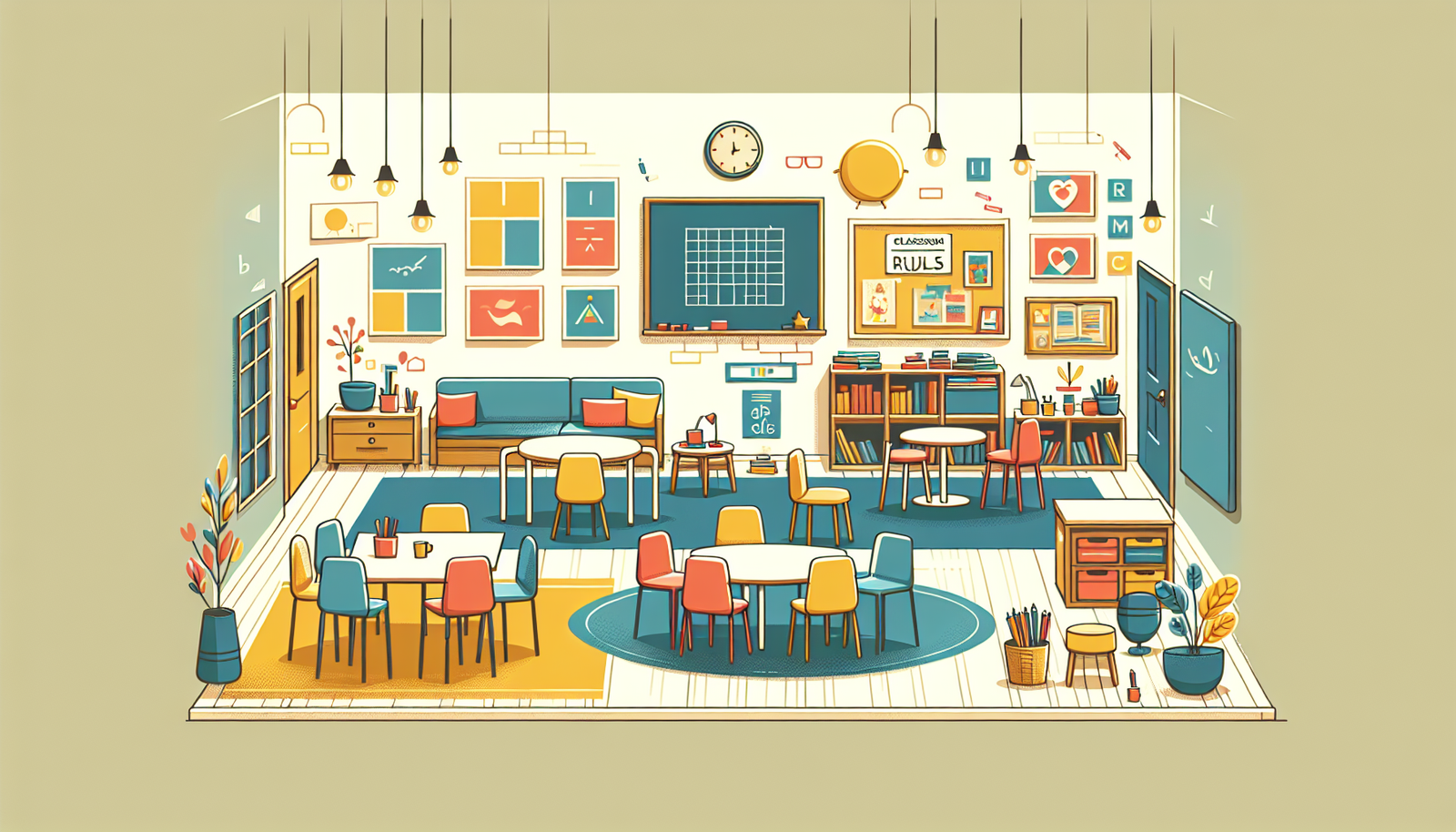
Step 3: Create a Safe and Inviting Physical Space
Physical space affects emotions. If students can’t find materials, aren’t sure where to sit, or feel crowded, they’ll spend energy worrying instead of learning.
What to do:
Layout for movement: I aim for clear pathways. If students can’t move safely, support falls apart fast. Use 2–3 zones:
- Work zone: desks or tables
- Collaboration zone: group table or area
- Reset zone: a calm spot for breaks (not punishment)
Accessible materials: Keep common tools at the point of use (pencils, highlighters, graphic organizers, headphones if allowed).
10–15 minute activity: “Tour + location drill” on day 1. Show students where:
- Submission tray is
- Missing-work forms are
- Help request card is
- Reset zone is
Then have them practice: “Find the organizer for today’s task in 30 seconds.” Yes, it feels silly. It also prevents 20 minutes of chaos later.
Checklist:
- Supplies are visible and labeled.
- Student work displays include a variety of levels, not just “top scores.”
- Reset zone is calm, not isolating.
- Lighting and noise are considered (especially for students with sensory needs).
Measure success: Watch how often students ask, “Where do I get…?” If questions drop week to week, your space is doing its job.
Step 4: Develop Clear and Positive Communication
Supportive classrooms communicate clearly. Students shouldn’t have to guess what you mean, how to start, or what “good” looks like.
What to do (communication protocol):
Teach how to talk: I use a simple “3-step help” routine:
- Step 1: Try the first example/first question
- Step 2: Ask a peer using a sentence stem
- Step 3: Request teacher help with a card or signal
Sentence stems: “I tried ____. I’m stuck on ____. Can you show me one hint?”
10–15 minute activity: Model + practice “respectful disagreement.” Put up two statements that are both defensible. Have students practice one disagreement sentence:
- “I see it differently because…”
- “My evidence is…”
- “Can we check the text/number again?”
Checklist:
- Directions are chunked (short, then check).
- I repeat key expectations (“Eyes on the task, voices low”) without sarcasm.
- I check understanding (quick thumbs, quick write, or 1 question).
- Feedback is specific, not just “good job.”
Measure success: Track the number of “instruction-related” disruptions (students off-task because they didn’t understand). When communication improves, those drop noticeably.
Step 5: Establish Classroom Rules and Expectations
Rules work best when students help create them. Otherwise, they feel like something you “impose,” not something you “build.”
What to do (rule contract template):
Have students create 4–6 rules using a simple structure: Behavior + Why + How it looks.
- Respect the Space — It keeps us safe and ready to learn — “We clean up, handle materials carefully, and keep pathways clear.”
- Respect People — It protects dignity — “We use kind words and listen when others speak.”
- Respect Learning Time — It helps everyone grow — “We start quickly, ask for help, and stay on task.”
10–15 minute activity (practice day): Scenario sorting. Read 6 mini-scenarios. Students decide: “Rule it breaks” and “Fix it.”
Example scenario: “A student is talking while the teacher is giving directions.” Fix: “Stop talking, eyes on speaker, repeat the first step.”
Checklist:
- Rules are posted and referenced daily for the first 2 weeks.
- Expectations include “what it looks like,” not just “don’t.”
- Consequences are consistent and explained calmly.
- Students can repeat the rules in their own words.
Measure success: Use a quick weekly tally: how many times you have to reteach expectations. When students internalize rules, reteaching drops.
Step 6: Use Positive Reinforcement to Motivate Students
Reinforcement works when it’s timely and specific. If you only praise results, students won’t know what process to repeat. I learned this the hard way after years of saying “Good job!” and wondering why behavior didn’t really change.
What to do:
Use a “praise formula”:
Template: “I noticed you did _____. That helped because _____.”
Example: “I noticed you helped your partner check the answer choice. That helped because you both understood the reasoning.”
Reward with purpose: Don’t make rewards random. Tie them to your rules/targets.
Simple reward system (low-prep): A class “momentum” tracker where students earn points for:
- Following the help routine
- On-task transitions
- Respectful discussion moves
10–15 minute activity: “Behavior spotlight”. Once or twice a week, share 2–3 anonymous examples of desired behavior (“One team used roles really well today…”). Students learn what to aim for without feeling singled out.
Checklist:
- I praise the exact behavior I want repeated.
- Reinforcement happens within the same class period.
- Students know what earns recognition.
- Rewards don’t replace instruction—they support it.
Measure success: Track frequency of the target behavior (ex: number of students using sentence stems in discussions). You’ll see improvement faster than you think.
Step 7: Encourage Open Discussion and Critical Thinking
Open discussion is where supportive environments really show up. Students need to believe their ideas won’t get mocked. “No wrong answers” is a great mindset—just don’t confuse it with “anything goes.”
What to do (discussion routine):
Use structured talk moves:
- Clarify: “Can you explain what you mean by ____?”
- Connect: “How does that relate to ____?”
- Challenge respectfully: “I’m not sure I agree. What evidence supports that?”
- Build: “I like that idea, and I’d add ____.”
10–15 minute activity: “Think–Write–Share” with sentence stems. Give a prompt, then:
- Think (1 minute)
- Write a 3-sentence response (3 minutes)
- Share with partner using stems (5 minutes)
- Whole-class share (2–3 minutes)
This helps quieter students participate without being put on the spot.
Checklist:
- I respond to ideas, not identities (no “you’re smart” comments only).
- I model academic language and curiosity.
- I correct misconceptions without shaming.
- Students can disagree using a taught sentence stem.
Measure success: Count the number of students who contribute at least once per discussion. Compare early vs. later weeks.
Step 8: Prioritize Social-Emotional Learning (SEL)
SEL shouldn’t feel like a separate “extra” you squeeze in if you have time. If you integrate it into routines, it becomes part of how your classroom runs.
What the research says (without overselling): Research on SEL generally suggests improvements in social-emotional skills and, in many studies, reductions in behavior issues. For example, the Collaborative for Academic, Social, and Emotional Learning (CASEL) reports that SEL is widely implemented and summarizes evidence of positive outcomes across schools. You can explore their work here: https://casel.org/. (Different studies show different effect sizes, so it’s best to treat SEL as “evidence-informed,” not guaranteed magic.)
What to do in your classroom:
- Teach emotion vocabulary: “anger, frustration, worry, excitement”
- Practice regulation strategies: breathing, self-talk, short reset breaks
- Use conflict scripts: “First I felt ____. Then I noticed ____. Next time I’ll ____.”
10–15 minute activity: Role-play scenario (2–3 times per week). Pick one real conflict from your classroom (like “someone cut in line” or “group work got tense”). Students act it out with a “pause and repair” script:
- Pause: “I need a second.”
- Say: “I felt ____ when ____.”
- Repair: “Can we try ____ together?”
Checklist:
- Students can name what they’re feeling (at least in simple terms).
- Reset tools are available and taught.
- Restorative conversations are consistent, not only for serious incidents.
- SEL is practiced during normal instruction, not only during problems.
Measure success: Track “time to recovery” after incidents. I’ve seen big improvement when students have practiced scripts and regulation tools ahead of time.
Step 9: Ensure Inclusivity and Accessibility for All Students
Inclusivity isn’t just about representation on posters. It’s about access. If a student can’t understand instructions, can’t read the materials, or can’t participate in discussions, they’re not included—even if you “invite” them.
What to do (access plan):
- Multiple ways to access content: visuals, audio, models, and examples
- Multiple ways to show learning: oral responses, graphic organizers, written work, or video (if allowed)
- Language supports: glossaries, sentence stems, and simplified directions
Concrete examples:
- For a student who struggles with writing, offer a partially completed paragraph.
- For a student with reading challenges, provide a short text + highlighted key terms.
- For multilingual learners, translate key instructions or provide visual cues for tasks and transitions.
10–15 minute activity: “Accessibility audit”. Pick one upcoming lesson and ask:
- Can every student see the instructions clearly?
- Is there an example/model?
- Do students have a way to request help?
- Is the vocabulary supported?
Fix 1–2 things immediately. Small changes add up.
Checklist:
- Directions are available in more than one format (posted + spoken + visual).
- Materials are accessible for students with IEP/504 needs.
- Participation options are real (not “you can sit quietly instead”).
- I plan for accessibility before the lesson, not after.
Measure success: Compare assignment completion rates and on-time submissions for the same unit across different groups. Accessibility improvements often show up as fewer “I didn’t understand” notes.
Step 10: Seek Feedback and Maintain Transparency
Feedback is how you keep support from turning into guesswork. And transparency? That’s what makes students feel like the classroom is a partnership, not a mystery.
What to do:
Student feedback loop (quick + honest): Once every 2 weeks, ask one question with a 1–5 scale and one short prompt.
- “How supported did you feel today?” (1–5)
- “What should I keep doing?”
- “What should I change?”
Then close the loop: Next class, say: “Two students said the directions were confusing, so I’m going to add a model example and check for understanding after step one.” People notice when you actually listen.
Transparency routine: At the start of each class, share:
- Goal: what students will learn
- Success criteria: what “done” looks like
- Why: how it connects to the unit
10–15 minute activity: Mini goal-setting conference. Give students 3 minutes to write:
- One thing I understand better than last week
- One thing I’m still working on
- One strategy I’ll try next time
Checklist:
- I share goals and success criteria in student-friendly language.
- I respond to feedback within 1–2 weeks.
- I don’t punish honesty (“I didn’t get it”)—I use it to adjust.
- Students know how to ask for help without stigma.
Measure success: Look at trends: student survey results, assignment completion, and the number of repeated behavior issues. When you’re transparent and responsive, students stop guessing—and start participating.
FAQs
Trust builds when students experience reliability. In practice, that means actively listening, using students’ names, showing empathy, and following through on expectations. I also find that small personal check-ins (like a quick “how are you really doing?”) make a big difference, especially when they’re followed by real action.
Start with clarity and comfort. Keep the room organized, label supplies, and make materials easy to find. Display student work (not only the “best” work), set up a calm reset area that students can use appropriately, and design pathways so movement doesn’t feel chaotic. A little predictability goes a long way for student anxiety.
Use short, repeatable practice. Role-playing real classroom scenarios, teaching emotion vocabulary, and using conflict-resolution scripts help students apply SEL skills when it matters. I also like quick journaling or “check-in” prompts because students often need a safe way to express feelings before they can focus academically.
Plan access from the start. Offer materials in multiple formats (visuals, simplified directions, models, and if possible audio support), provide sentence stems, and give students different ways to show learning. Most importantly, create an environment where participation is valued and every student’s voice is treated as meaningful.