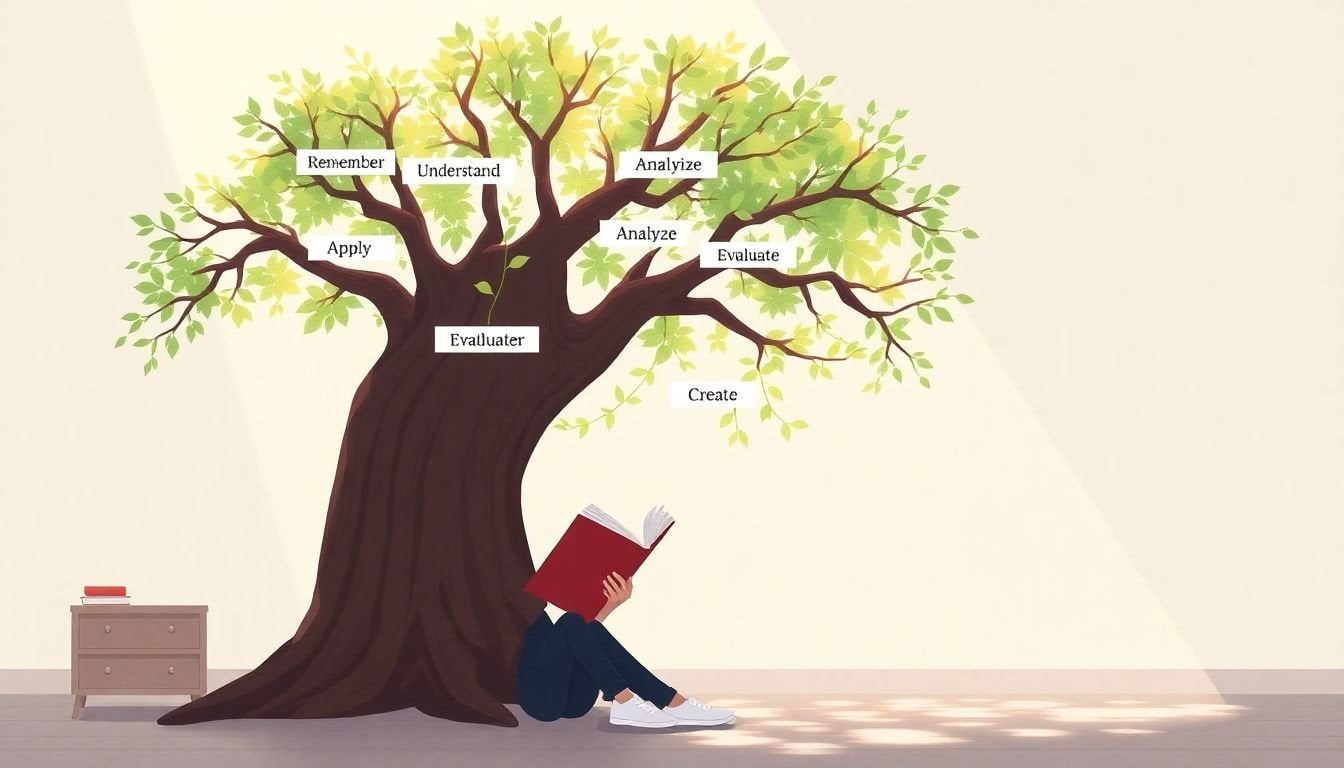
Applying Bloom’s Taxonomy in Course Design: 8 Key Steps
Designing a course that actually clicks with learners can be a little stressful. You’re trying to cover the required content, keep people interested, and still make sure the learning outcomes aren’t just “nice ideas” on a syllabus. If that sounds familiar, you’re definitely not alone.
What I’ve noticed is this: when course goals are fuzzy, everything else gets fuzzy too—activities feel random, assessments feel like an afterthought, and students don’t know what “success” looks like. That’s where Bloom’s Taxonomy comes in handy. It gives you a practical way to connect objectives, learning activities, and assessments so students are building skills in a logical progression.
In this post, I’ll show you how to use Bloom’s Taxonomy across a full course workflow: from choosing measurable objectives, to designing lessons and activities, to writing assessments that match the level of thinking you want. And yes—I’ll include a concrete example mapping objectives to assessment items, so you can steal the structure for your own course.
Key Takeaways
- Bloom’s Taxonomy helps you design courses with a clear progression from recall to evaluation.
- Use the six levels (Knowledge, Comprehension, Application, Analysis, Synthesis, Evaluation) to guide what students do—not just what they “know.”
- Write measurable learning objectives using action verbs, then align activities and grading criteria to those verbs.
- Design lessons so each session includes at least one meaningful task at a specific Bloom level (and ideally multiple levels over a unit).
- Build assessments that match the intended cognitive level—don’t test analysis with a “list the facts” question.
- In my experience, the biggest payoff is consistency: students understand expectations, and instructors spend less time guessing what to assess.
- Real alignment examples are more useful than vague “success stories”—look for details like the industry, the course duration, and the actual assessment changes.
- When you align objectives, activities, and assessments, you create a classroom culture where deeper thinking is normal, not optional.
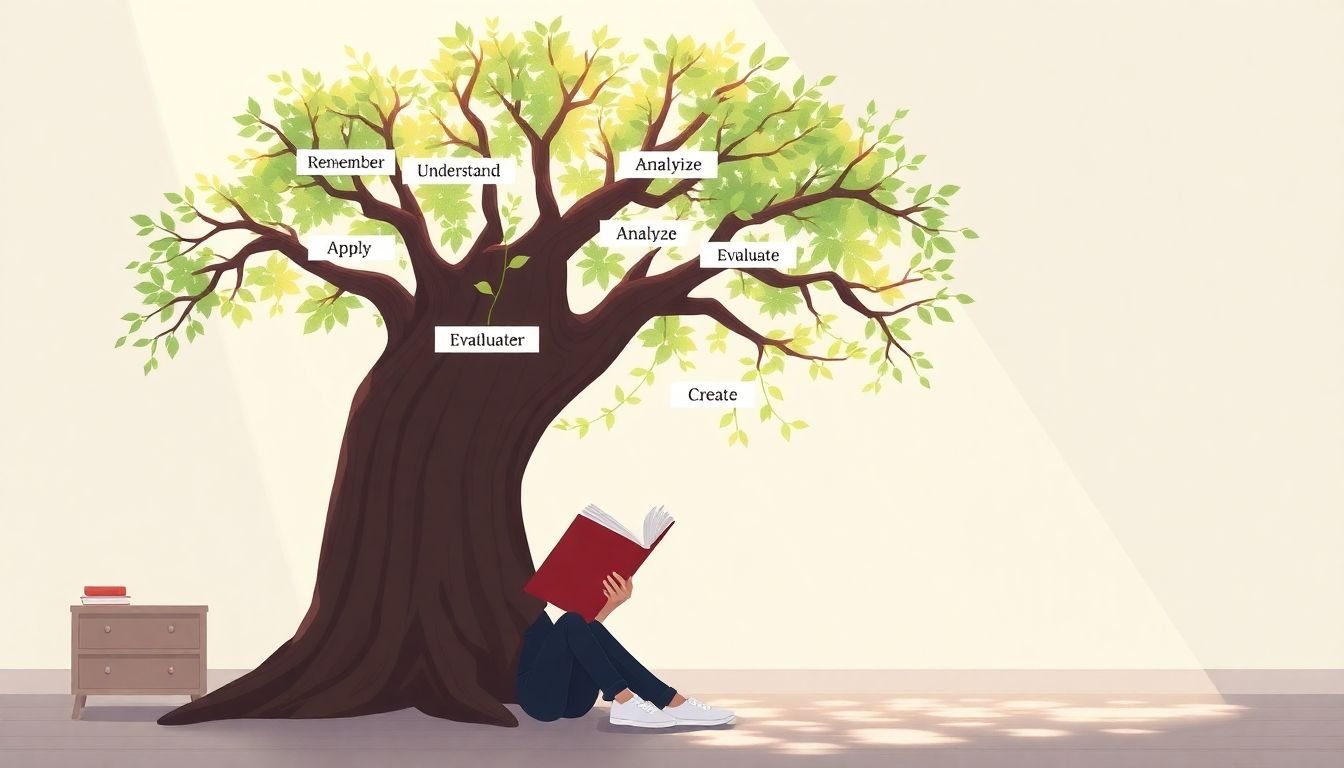
1. Implement Bloom’s Taxonomy in Your Course Design
Bloom’s Taxonomy can make course design feel less like guesswork. Instead of asking, “What should I teach next?”, you can ask, “What should learners be able to do after this unit?” That shift is huge.
Here’s the simplest way I implement it: I treat Bloom as a mapping tool across the course, not just a list of levels. I start with my curriculum goals, then I pick activities and assessments that match those cognitive levels.
What it looks like in practice
Let’s say I’m designing a 4-week course for first-year analysts on data-informed decision making. If I only write objectives at the “Knowledge” and “Comprehension” levels, my students will ace quizzes… and still struggle when it’s time to interpret data or justify a recommendation.
So I deliberately build progression:
- Knowledge/Comprehension: identify key terms, explain what each metric means
- Application: calculate metrics for a provided dataset
- Analysis: interpret patterns, compare segments, spot inconsistencies
- Synthesis: combine insights into a recommendation brief
- Evaluation: defend the recommendation against alternatives using criteria
And yes, I’ve seen the difference. In one course I revised, the biggest change wasn’t adding “harder” material—it was rewriting assessments so they actually required analysis and evaluation. The final submissions were better, and students told me they felt like the assignments matched what we practiced in class.
If you want help thinking through this workflow, the Effective Teaching Strategies guide can be a good companion while you map your lessons to objectives.
2. Learn About the Levels of Bloom’s Taxonomy
Bloom’s Taxonomy is usually taught as six levels. They’re not meant to be a rigid ladder you never step off. But they’re a solid way to design tasks with increasing cognitive demand.
The six levels are:
- Knowledge: recall facts, terms, definitions
- Comprehension: explain ideas in your own words; interpret meaning
- Application: use knowledge in new situations
- Analysis: break information into parts; identify relationships and patterns
- Synthesis: combine elements to create something new (a plan, model, proposal)
- Evaluation: make judgments using criteria (and justify them)
Here’s a quick reality check: you can’t skip the lower levels entirely. Students need baseline understanding before they can analyze or evaluate. But you also shouldn’t stop there.
To make this less abstract, I like to use an example scenario when planning.
Example scenario (biology): “Evaluating an experiment”
- Knowledge: “Define control group and independent variable.”
- Comprehension: “Explain what the results suggest based on the graph.”
- Application: “Label variables in a provided study summary.”
- Analysis: “Identify confounding factors and describe how they affect validity.”
- Synthesis: “Propose a revised experiment design with steps and measures.”
- Evaluation: “Judge which design is stronger using a rubric (validity, reliability, feasibility).”
Notice how the tasks change. You’re not just increasing difficulty—you’re changing the type of thinking.
3. Set Clear Learning Objectives Using the Taxonomy
Learning objectives are the backbone of the whole course. If they’re vague, your lessons and assessments will drift. Bloom’s Taxonomy helps you write objectives that are specific enough to measure.
When I write objectives, I aim for three things:
- Clarity: students can understand what they’re expected to do
- Measurability: there’s a clear way to assess performance
- Alignment: the verbs match the cognitive level you want
Example objective set (data-informed decision making)
- Knowledge: “Students will be able to define mean, median, and standard deviation.”
- Comprehension: “Students will be able to interpret a distribution and explain what it implies for a business question.”
- Application: “Students will be able to compute selected metrics from a provided dataset.”
- Analysis: “Students will be able to identify patterns and explain possible causes using evidence from the data.”
- Synthesis: “Students will be able to draft a recommendation brief that combines multiple metrics into a coherent argument.”
- Evaluation: “Students will be able to evaluate competing recommendations using a defined set of criteria (impact, risk, and data quality).”
One tip that saves a ton of time: don’t write objectives first and “figure out assessments later.” I do the reverse sometimes—draft an assessment question I want students to answer, then back into the objective and activity levels that support it.
If you’re looking for additional guidance, you can also find tips on crafting effective learning objectives in the course structure guides.
Sample objective-to-assessment mapping (steal this format)
Below is the kind of mapping I use when I’m revising a course. It keeps me honest about what I’m actually testing.
- Objective (Analysis): “Identify patterns and explain possible causes using evidence from the data.”
- Activity: small-group “data detective” worksheet where students annotate a chart (trend, outliers, segments).
- Assessment item: short-answer prompt: “What pattern do you see? What evidence supports it? What’s one plausible cause and what would you check next?”
- Rubric criteria: evidence used (0–2), reasoning (0–2), quality of next step (0–2).

4. Design Effective Lessons and Activities
Activities are where Bloom’s Taxonomy stops being theory. If your activity only asks students to recall or summarize, you can’t realistically expect evaluation-level performance later.
I like to plan each lesson with a “main task” and a “support task.” The main task hits the intended Bloom level. The support task builds prerequisite knowledge or vocabulary.
Example lesson plan (Application → Analysis)
- Main task (Application): “Students calculate three metrics (conversion rate, retention, churn) for a provided dataset.”
- Support task (Knowledge/Comprehension): quick checks: “Which metric measures what?” “What does a higher value usually imply?”
- Transition (Analysis): “Now interpret the results: where do you see anomalies? What might explain them?”
And yes, you should mix teaching methods. In my experience, it’s not just about keeping things interesting—it’s about matching learning tasks to the method.
- Short lecture: best for Knowledge/Comprehension (when it’s crisp and not too long)
- Hands-on work: best for Application (calculation, labeling, applying a concept)
- Discussion with a structure: best for Analysis (students need prompts like “What evidence supports that?”)
- Projects: best for Synthesis/Evaluation (students create and justify)
If you want a framework for structuring these sessions, you can also use lesson preparation guides as a starting point.
One limitation to be aware of: technology doesn’t automatically create higher-order thinking. A collaborative tool can still produce shallow output if your prompt is weak. The prompt matters more than the platform.
5. Create Assessments That Match Learning Levels
This is where courses often break. Teachers write higher-level objectives, but assessments end up being mostly recall. Students can’t “telepath” their way to analysis if the test only rewards memorization.
So I start with the Bloom level and write the assessment item to match it.
What to do (step-by-step)
- Step 1: pick the objective level (say, Analysis).
- Step 2: decide what evidence students must use (data excerpt, scenario, reading passage).
- Step 3: write a prompt that requires the thinking skill (identify patterns, justify conclusions, compare options).
- Step 4: build a rubric that makes grading consistent.
Assessment examples by Bloom level
- Knowledge: “List the five components of X.” (Fast check, low stakes.)
- Comprehension: “Explain why metric A is better than metric B for this scenario.”
- Application: “Calculate churn for the provided table and interpret what it means.”
- Analysis: “Spot two anomalies in the dataset and explain likely causes.”
- Synthesis: “Write a recommendation brief that combines metrics and supports a single decision.”
- Evaluation: “Choose between two strategies and defend your choice using criteria (impact, risk, data quality).”
Also, don’t rely on only one assessment type. A mix makes the course more fair and gives you a fuller picture of learning.
- Quizzes for Knowledge/Comprehension (quick feedback)
- Case write-ups or short essays for Analysis
- Projects or presentations for Synthesis/Evaluation
One more thing: if you’re using rubrics, keep them short enough to use. I’ve found that 3–5 criteria is usually the sweet spot for consistency without turning grading into a second job.
6. Enjoy the Benefits of Using Bloom’s Taxonomy
When Bloom’s Taxonomy is used well, it helps in a few very tangible ways.
First, it improves alignment. Students know what they’re working toward because objectives match activities and assessments. That reduces the “wait, what are we supposed to do?” confusion.
Second, it supports deeper thinking. You’re not just asking students to repeat content—you’re asking them to interpret, apply, and judge.
About research: you’ll often see claims that structured questioning improves analytical ability. I don’t want to pretend every citation is perfectly aligned to every classroom context, though. What I can say from practice is that when I rewrite questions to require evidence and justification (instead of just “what do you think?”), the quality of reasoning goes up fast.
Third, it makes feedback easier. If you know a student’s work is supposed to demonstrate Analysis or Evaluation, you can give targeted feedback like “your conclusion doesn’t match the evidence” instead of vague comments.
In short: Bloom’s Taxonomy doesn’t magically make students smarter. But it does make your course design more intentional—and that intention shows up in student work.
7. Review Real-Life Examples of Successful Course Design
Let’s get away from generic “success stories.” What’s actually useful is understanding what changed in a course and what the results looked like.
Example 1: Intro biology (mixed assessment redesign)
In a biology course I reviewed for alignment, the instructor had lots of recall-based quizzes but very little assessment of experimental reasoning. The revision focused on one unit: “designing and evaluating experiments.”
- What changed: quizzes were updated to include variable identification and interpretation tasks, and the final assignment required students to propose a revised experiment.
- Bloom alignment: Knowledge/Comprehension items fed into Application and Analysis tasks; the final proposal and defense were mapped to Synthesis/Evaluation.
- What I noticed in outcomes: students’ final submissions included better justifications and fewer “guessy” conclusions because the rubric required evidence and criteria.
Example 2: Workplace training (customer support decision making)
In a workplace training program (customer support decision making), the original version taught policies and terminology, but the assessments were mostly multiple-choice. The updated version replaced some of that with scenario-based decisions.
- What changed: learners evaluated two different resolution paths for the same customer case.
- Bloom alignment: Application was practiced through applying policy rules to scenarios; Evaluation was assessed through selecting the best approach using criteria like customer impact and compliance risk.
- Practical result: managers reported fewer “wrong policy but confident” responses, because the assessment forced justification—not just selection.
In both cases, the “success” wasn’t that the course got harder. It got more coherent. Students practiced what they were later tested on.
8. Summarize the Importance of Bloom’s Taxonomy in Learning
Bloom’s Taxonomy is useful because it gives you a clear way to structure learning: set objectives, design activities, and build assessments that match the cognitive level you want.
When you do that, students aren’t just moving through content—they’re practicing the thinking skills required for the next step. That’s how you get deeper learning, not just better test scores.
If you’re starting fresh or revamping an existing course, it’s worth revisiting your objectives and asking one simple question: Do my assessments actually require the same level of thinking I claimed in my objectives?
You may also find useful tips on effective course design by checking this course structure guide.
FAQs
Bloom’s Taxonomy is a framework for categorizing educational goals by the type of thinking students are expected to do. It’s important because it helps educators write clearer learning objectives and design assessments that measure more than just recall, which supports deeper understanding.
Start by choosing the cognitive level you want (for example, Analysis or Evaluation). Then write objectives using Bloom-aligned action verbs (like analyze, justify, evaluate, design). Finally, make sure the objective is measurable—so you can assess it with a specific task or product.
It helps you align lessons with objectives and assessments, which makes course expectations clearer for students. It also encourages tasks that build higher-order thinking over time, so learning activities don’t stay stuck at memorization.
Sure. For Knowledge, a basic quiz can work. For Analysis, use a case study where students must identify patterns and explain evidence. For Synthesis/Evaluation, ask learners to produce a recommendation or plan and then justify it against criteria in a short written response or presentation.